Table of Contents
ToggleUnused space under your bed is real estate you’re literally sleeping on. Whether you’re managing a cramped apartment or just trying to reclaim closet space, under-bed storage can hold seasonal clothing, bedding, out-of-season gear, or items you don’t access daily. The key is choosing a solution that doesn’t trap moisture, doesn’t make the bed wobble, and actually fits your lifestyle. This guide walks through seven practical approaches, from simple rolling containers to built-in platform frames, so you can pick what works for your bedroom layout and budget.
Key Takeaways
- Under-bed storage maximizes unused bedroom space by safely holding seasonal clothing, bedding, and rarely accessed items without sacrificing accessibility or bed stability.
- Sliding drawers with ball-bearing slides and full-extension capability are the most practical under-bed storage solution, handling 75–100 pounds and allowing easy access to contents.
- Platform beds with built-in integrated storage drawers eliminate wheels and gaps that trap dust, making them ideal for small bedrooms where space-saving solutions are essential.
- Vacuum-sealed compression bags shrink bulky items like winter coats to notebook size, but require desiccant packets and quarterly inspections to prevent moisture damage in humid environments.
- Rolling containers with swivel-and-fixed caster combinations and thick-wall polypropylene construction offer flexible, customizable storage that fits various bed heights and weights.
- Bed risers that elevate your frame from 8 to 16 inches instantly create tall storage space underneath, though they require careful placement on load-bearing legs to prevent dangerous wobble.
Sliding Drawers and Storage Boxes
Sliding drawers are the workhorse of under-bed storage. They roll smoothly on ball-bearing slides and let you access what’s inside without moving the entire bed. A typical under-bed drawer runs 18 to 24 inches deep, 39 to 54 inches wide, and 6 to 10 inches tall, tight enough to fit under most standard frames, but roomy enough for folded clothes, extra pillows, or linens.
When shopping for sliding drawers, check the weight rating. A solid wood or plywood construction should handle 75 to 100 pounds per drawer without sagging. Look for drawers with full-extension slides, they let you pull the drawer all the way out, not just halfway, so you can see and reach everything inside. Particle board models are cheaper but won’t last as long under weight and moisture.
For a DIY approach, you can build your own wooden drawer boxes and install heavy-duty caster wheels with locking brakes underneath. Use 3/4-inch plywood, pocket hole joints (via a Kreg Jig or similar tool), and reinforce the bottom with a 1×2 support frame. This gives you a sturdy, customizable drawer at a fraction of the cost. Just ensure the bed frame is solid and level, a wobbly frame will cause drawers to bind or roll crooked.
Seal or sand the interior surfaces to prevent splinters, and consider a thin moisture barrier (like polyethylene sheeting) between the floor and your drawer to prevent dust accumulation and humidity issues.
Platform Beds With Built-In Storage
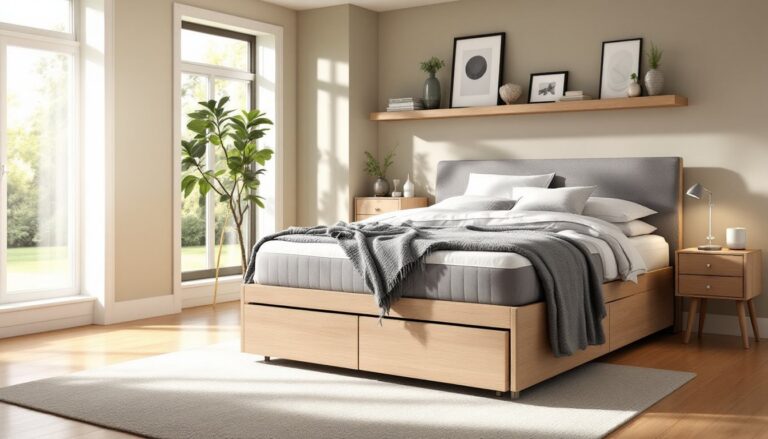
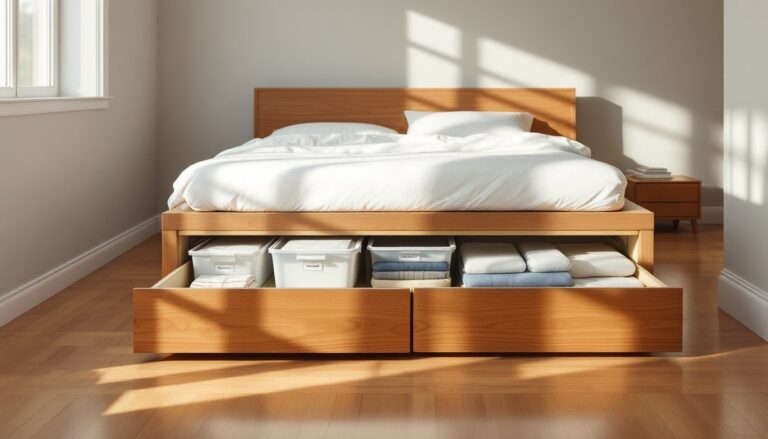
A platform bed with integrated storage is the ultimate space-maximizing move, especially in small bedrooms. Unlike traditional bed frames with a box spring, platform beds rest directly on a solid base, often with drawers, shelves, or cubbies built into the frame itself. The Full Size Storage Bed is designed specifically to handle this demand.
Built-in platform storage typically includes two to six drawers beneath the mattress, side cubby shelves, or a lift-top design that opens the entire base for access. A queen-size platform bed with two storage drawers can hold 150 to 200 pounds of items while keeping them out of sight. The advantage over sliding drawers is that the storage is integrated into the frame, no wheels to catch on carpet, no gap between the drawer and bed to trap dust.
If you’re building your own, the frame needs to be robust. Use 2×10 or 2×12 lumber for the perimeter rails, and add cross-braces every 18 inches to prevent sagging under the mattress weight. Cabinet-grade plywood (3/4-inch) works well for drawer boxes. Make sure all joints are reinforced with pocket holes, dowels, or mortise-and-tenon joinery, not just nails. The bed will shift and flex with sleep, so weak joints fail fast.
One downside: built-in storage is harder to access if you need something quickly. If you store off-season items and rarely touch them, that’s fine. If you grab things frequently, sliding drawers are more convenient.
Vacuum-Sealed Bags for Seasonal Items
Vacuum-sealed compression bags are perfect for bulky, low-access items, winter coats, down comforters, holiday decorations, or spare bedding. A single gallon-size vacuum bag shrinks a winter coat to about the size of a notebook, and a queen comforter becomes a compact 12×16-inch rectangle. You’ll fit three to four times more volume in the same space compared to traditional storage.
Here’s the catch: vacuum bags don’t prevent moisture or insects long-term. Humidity under beds can be higher than in closets, especially in basements or humid climates. If you live in a damp area, pair vacuum bags with desiccant packets (silica gel) to absorb moisture. Change them every six months. Also, inspect bags quarterly, a slow leak defeats the whole purpose.
When packing, use clean storage bags and avoid overstuffing. Vacuum the bag just enough to compress the contents: over-vacuuming can rupture the seal or damage delicate fabrics. Layer bags flat under the bed rather than stacking them vertically, flat stacks are more stable and easier to slide.
Durable bags (often sold in sets with hand pumps) last longer than cheap disposables. Premium brands include vacuum bags with ziplock AND valve seals, which provides a backup if one seal fails. For seasonal rotation, label bags with permanent marker before sealing, you won’t be able to read ink through a compressed bag.
Rolling Containers and Casters
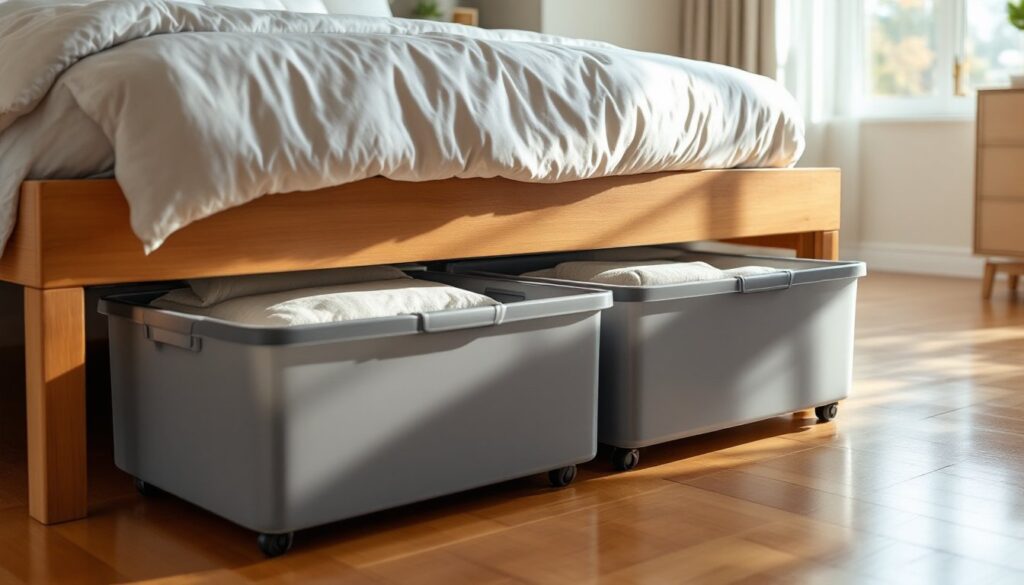
Rolling containers sit somewhere between loose boxes and purpose-built drawers. Plastic storage bins on locking casters give you the flexibility of customizable sizes and the convenience of mobility. You can slide them out for quick access, swap them if you reorganize, or roll them across the room.
When choosing containers, measure your bed height and frame clearance. Most standard bed frames sit 8 to 12 inches off the floor: you’ll need rolling bins 6 to 8 inches tall to fit comfortably. Look for bins with thick-wall polypropylene (not flimsy or thin plastic) and recessed wheels that tuck under the base so the container sits lower and more stable.
Casters matter more than you’d think. Swivel wheels lock better than fixed wheels, but fixed wheels track straighter. For under-bed use, a combo setup (two swivel, two fixed) works best, it lets you angle the container out and then roll it straight. Ball-bearing casters roll smoother than sleeve bearings, especially if you’re pulling out heavy bins frequently. Budget $3 to $8 per caster: cheap ones jam or break within months.
Choosing the Right Container Size
Standard under-bed container dimensions range from 15×25 inches (small shoe organizer) to 27×38 inches (nearly full bed width). For a queen bed with side clearance, two containers 26×38 inches each fit perfectly side-by-side. For a full bed, you might use three narrower bins or two offset bins.
Weight is also critical. Polypropylene bins hold 25 to 40 pounds safely before the plastic flexes. If you’re storing heavier items (books, tools, or tools), reinforce the bottom with a plywood insert or use a purpose-built metal-frame rolling cart instead. Metal carts cost more but handle 100-plus pounds and last longer.
Label every container with a waterproof label before filling. Under-bed storage lives in a dark zone: you’ll forget what’s in each bin. Print a small inventory list and tape it to the lid.
Bed Risers and Elevated Frames
Bed risers, solid blocks or adjustable legs that lift your mattress higher, instantly create tall storage space underneath. Raising a bed from 8 inches to 16 inches doubles your usable height, allowing you to stack full-height plastic storage bins or even a rolling shelving unit underneath.
Solid plastic or wooden risers (typically 3 to 6 inches tall) are the cheapest option and work fine for stationary storage. Adjustable metal risers (4 to 9 inches, often threaded) give you flexibility if you later want to lower the bed or swap out storage below. Look for risers rated for at least 1,500 pounds per set to handle two adults and mattress safely, most quality risers handle this with no problem.
Before installing risers, check that your bed frame isn’t sagging or warped. Set the risers directly under the frame’s load-bearing legs or cross-braces, never under the center, off-center risers can cause dangerous wobble. If your frame has wheels, remove them or lock the wheels before installing risers: you don’t want the bed rolling accidentally.
With the extra height, the tradeoff is accessibility. You’ll need to bend or kneel to pull bins in and out, and you can’t store fragile items under the bed if there’s a risk of dropping them from higher. For families with kids, make sure items under the bed aren’t attractive toys, a curious toddler climbing under a 16-inch-high bed is a pinch hazard. The benefit is that Space Saving Tiny Home Storage Solutions gain an extra dimension with this simple upgrade.
Some platform-style bed frames already come with built-in legs that offer 12 to 18 inches of clearance. If you’re building a bed frame from scratch, design the legs or supports to provide ample height, and ensure horizontal cross-bracing prevents racking (twisting) of the frame under weight.
Conclusion
Under-bed storage transforms wasted space into functional capacity, whether you opt for simple rolling bins, sliding drawers, vacuum bags, or a platform bed with built-in storage. The right choice depends on your bedroom layout, how often you access items, and your budget. Prep and measure first, invest in quality hardware, and keep moisture in mind. Creative storage setups like Storage Bins Home Depot offers show that even modest bedroom upgrades can reclaim square footage and reduce clutter. Start with one solution and expand as your needs grow.