Table of Contents
ToggleA day bed with trundle and storage isn’t just furniture, it’s a strategic problem-solver for anyone juggling limited square footage. Whether you’re furnishing a guest bedroom that pulls double duty, outfitting a kid’s room, or maximizing a studio apartment, this three-in-one piece delivers sleeping surfaces, hidden storage, and a polished look without the bulk of a traditional dresser. By combining an upper mattress, a tucked-away trundle bed, and built-in drawers or shelving, you’re essentially reclaiming half your floor space while gaining functionality that justifies the investment. For homeowners tired of furniture sprawl and DIY enthusiasts ready for a smarter setup, day beds with trundle and storage have become the go-to choice in 2026.
Key Takeaways
- A day bed with trundle and storage consolidates sleeping surfaces, guest accommodations, and storage into one multifunctional piece, freeing floor space in bedrooms under 120 square feet.
- Quality trundle mechanisms use full-extension ball-bearing slides and accommodate twin (38″ × 75″) or full-size mattresses with proper 12–15 inch ground clearance for smooth operation.
- Storage capacity on a 48-inch-wide day bed with three full-depth drawers holds 40–50 cubic feet—equivalent to a medium dresser and nightstand combined, with soft-close slides adding durability.
- Wood day beds with trundle and storage dominate the market for durability and aesthetics, while upholstered frames work best in studios or open-concept homes seeking a sofa-like appearance.
- Measure your space in three dimensions before purchase, ensuring at least 12 inches of walking clearance and verifying that your trundle fits under the main frame without sticking out.
- Styling a day bed as a focal point uses layered bedding, coordinating pillows (roughly one-third the bed’s width), and neutral color palettes that unify small rooms.
Why Choose a Day Bed With Trundle and Storage
A day bed with trundle and storage solves what most furniture can’t: the space problem. Traditional bedroom setups eat up real estate with separate beds, nightstands, dressers, and storage units stacked around the perimeter. A single piece consolidates all of that.
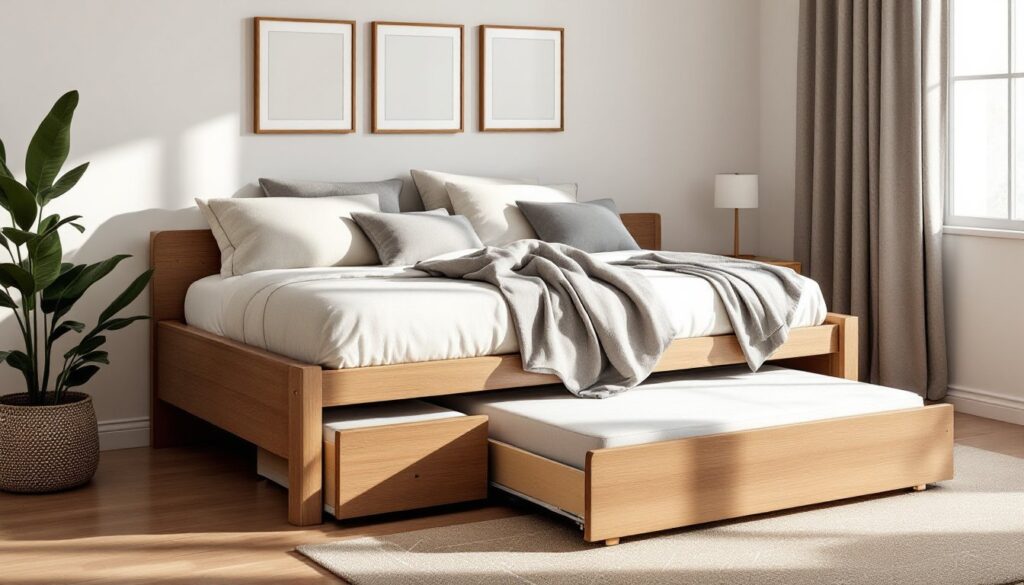
The trundle bed, a secondary mattress that rolls or slides under the main frame, means you’re always ready for overnight guests without dedicating a second bedroom or hauling out a fold-out cot. The storage component (typically deep drawers or cubbies built into the frame’s base) eliminates the need for a bulky dresser, freeing floor space and reducing visual clutter. This matters especially in bedrooms under 120 square feet, where every inch counts.
Beyond the practical angle, a day bed with trundle and storage serves double duty as seating. A well-styled day bed becomes a reading nook, lounging spot, or home office perch during the day, then transforms into a proper sleep surface at night. Families appreciate the flexibility: kids’ rooms shift from daytime playspace to guest-ready bedrooms in minutes. For apartments and small homes, this multifunctionality justifies the typically higher upfront cost compared to a basic bed frame.
Safety and durability matter too. Properly constructed day beds distribute weight across reinforced frames, accommodating two people (main bed plus guest on the trundle) without flex or noise. Quality storage drawers glide on ball-bearing slides, so you’re not forcing stiff wood-on-wood contact every time you grab a blanket or stored item.
Key Features to Look For
Trundle Bed Quality and Design
Not all trundles are created equal. A quality trundle sits on smooth, full-extension ball-bearing slides (like drawer hardware) and rolls or pulls out effortlessly, no jamming, no dragging. Check the wheels or slide mechanism: cheap ones bind under weight or wobble sideways. If you’re building from plans, reinforce the base frame with 2×6 joists (actual dimension: 1.5″ × 5.5″) running perpendicular to the length, and use half-inch plywood for stability.
Mattress compatibility is crucial. The trundle typically fits a twin mattress (38″ × 75″), but some premium models accommodate a full-size trundle (54″ × 75″). Measure your target space and confirm the trundle’s dimensions before purchasing. A trundle that’s too high when extended won’t slide under the main frame: too low and it feels cramped. Standard height for a loaded trundle mattress should sit about 12–15 inches off the floor.
Look for pop-up trundles, which use a hydraulic or spring mechanism to raise the trundle to the same height as the main bed, creating a larger sleep surface. These cost more but eliminate the “sleeping in a drawer” feel and appeal to adults who’d rather not contort themselves.
Storage Solutions and Capacity
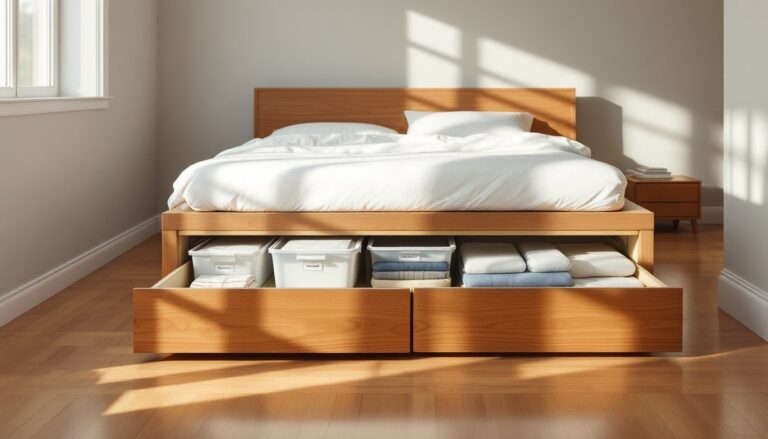
Storage comes in three flavors: built-in drawers under the frame, cubbies integrated into the headboard, or a combination. Deep drawers (18–24 inches) hold seasonal bedding, off-season clothing, or bulky items: shallower ones (8–12 inches) suit everyday linens and small goods.
Drawer count and slide quality determine real-world usability. A single large drawer is easier to access than three small ones stacked atop each other: conversely, multiple shallow drawers let you organize by category. Soft-close slides cost more but prevent slamming and reduce wear. If you’re tired of the cabinet banging that echoes through a quiet house, soft-close is worth the premium.
Capacity matters: a 48-inch-wide day bed with three full-depth drawers holds roughly 40–50 cubic feet of storage, equivalent to a medium dresser and nightstand combined. For smaller spaces, measure what you need to store (winter coats, guest bedding, board games) and match that to the model’s specs. Don’t assume a large frame automatically means spacious storage: some designs sacrifice depth for aesthetic height.
Popular Styles and Materials
Wood remains the dominant material for day beds, offering durability and classic aesthetics. Solid hardwoods (oak, cherry, walnut) are premium choices, standing up to years of use and accepting stain or paint. Engineered wood and plywood composite frames cost less but check weight capacity and warranty: a loaded trundle exerts serious force on fasteners and joints, and flimsy construction fails fast under real-world stress.
Upholstered day beds with trundle and storage are gaining traction, especially in smaller living spaces where a padded frame softens the room’s visual weight. Linen, cotton, or performance fabric wraps the frame, creating a sofa-like appearance. Upholstered frames blur the line between bedroom and living area, ideal for studio apartments or open-concept homes. Expect higher maintenance: fabric traps dust and requires vacuuming, and spills need prompt attention.
Modern minimalist designs favor low-profile frames (8–12 inches) with clean lines and minimal ornamentation. Mid-century styles reinterpret 1950s proportions with tapered legs and warm wood tones. Farmhouse aesthetics pair reclaimed or distressed wood with decorative drawer pulls and a chunky headboard. For DIY builders, projects from Ana White’s free woodworking plans offer detailed layouts for rustic or modern styles.
Color and finish shape the feel. Natural stain shows wood grain and hides minor scratches: painted frames (chalk paint, eggshell, or satin polyurethane) offer design flexibility and easier touch-ups. Dark finishes hide dust but show dust more in natural light (counterintuitive but true): light finishes do the opposite. Matte finishes are forgiving: gloss shows every fingerprint.
How to Choose the Right Size for Your Space
Before shopping, measure your bedroom or designated space in three dimensions: width, length, and ceiling height. A standard day bed frame runs 39–40 inches wide (for a twin mattress) or 54–56 inches (for a full). With headboard and footboard, total depth is 80–84 inches. Confirm these dimensions fit your room with at least 12 inches of walking clearance on the sides and foot.
Ceiling height matters for upholstered headboards, which can add 8–12 inches of visual height. A tall headboard in an 8-foot room feels cramped: opt for a lower-profile frame or wall-mounted headboard instead. If your room has a sloped ceiling or window, sketch out the placement and confirm clearance before purchasing.
Mattress depth affects overall height. A standard 8-inch innerspring or memory foam mattress on the main bed puts the sleep surface at roughly 24–28 inches (including frame). Add a 5–6 inch foam topper and you’re near 33 inches, comfortable for sitting upright but ensure the headboard doesn’t interfere with propped pillows.
For trundle compatibility, measure the floor-to-frame-bottom clearance on your main bed. Standard day beds clear 12–15 inches, enough for a standard twin trundle (5–6 inches tall with mattress). Measure twice: a miscalculation means the trundle won’t fit or sticks out awkwardly. In a shared room or studio, consider whether a full-size trundle, taking up more floor space when extended, is practical. A twin trundle is the safer choice for tight quarters. For rooms 120 square feet or smaller, a full-size storage bed frame might offer better overall value than a day bed if you don’t need the daytime seating function.
Styling and Decorating Tips
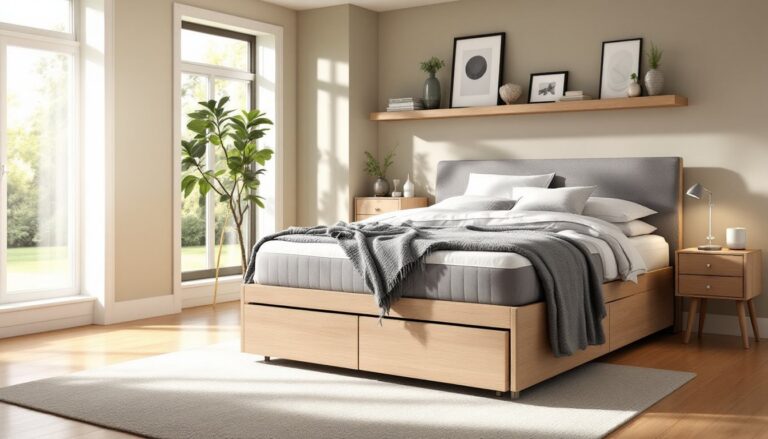
A well-styled day bed becomes a focal point, not an afterthought. Start with layering: a quality base mattress, a fitted sheet, a flat sheet, and two coordinating throw pillows create a finished look. Add a lightweight throw blanket (linen or cotton, not heavy quilts that overwhelm a narrow frame) draped over the arm or foot rail. Proportion matters, pillows should be roughly one-third the bed’s width to avoid a cramped feel.
Headboard styling depends on the frame design. Wall-mounted shelving above a low-profile frame adds visual height without bulk: grouped artwork (3–5 framed pieces) personalizes without cluttering. For frame-integrated headboards, a single large piece of wall art or a decorative mirror above creates balance. Avoid overstuffing: DIYers and design enthusiasts alike know that less is more in small spaces.
Color palette should unify the room. Neutral bedding (cream, gray, navy) pairs with accent pillows in a complementary tone. A patterned throw or accent wall adds personality without chaos. In shared spaces (like studios or guest bedrooms), neutral grounds make the bed feel like part of the room’s backbone rather than a competing visual element.
Storage accessibility affects styling too. If drawers are constantly open hunting for items, the room feels chaotic. Assign storage zones: one drawer for linens, another for off-season items, a third for guests’ belongings. Label them (simple masking tape and a Sharpie work) and you’ll save time and maintain order. For inspiration on storage systems that maximize small-space furniture, explore resources like The Handyman’s Daughter or Instructables for creative organizational hacks paired with furniture layout ideas.