Table of Contents
ToggleTruck owners face a constant challenge: how to keep tools, camping gear, and valuables safe and dry without sacrificing bed space. A waterproof truck bed storage box solves this problem elegantly. Unlike plastic bins or tarps that fail when you need them most, a properly designed waterproof storage box keeps contents protected from rain, dust, and UV damage while staying locked and secure. Whether you’re hauling work equipment or weekend adventure gear, the right box transforms your truck bed from cluttered to organized, and your truck bed itself from exposed to protected.
Key Takeaways
- A waterproof truck bed storage box combines gasket seals, angled lids, and drainage systems to keep contents protected from rain, dust, and UV damage while keeping your truck bed organized and secure.
- Quality gasket seals made from dense rubber or neoprene are the critical component—they compress when the lid closes to create an airtight, watertight barrier that blocks water entry in heavy rain or car washes.
- Material choice affects both longevity and cost: aluminum resists rust completely ($600–$1,500), steel offers durability with maintenance ($400–$900), and cross-linked polyethylene provides the best value ($200–$600) with UV protection.
- Proper installation requires a clean bed surface, even gasket compression, stainless steel hardware tightened in a cross pattern to 15–20 foot-pounds, and regular maintenance of gaskets and locks to ensure a 10+ year lifespan.
- Choose between cross-bed boxes (maximum storage, 15–35 cubic feet) or side-mount boxes (5–15 cubic feet) based on whether you need primary seasonal storage or occasional protection for long materials.
- Always verify your truck’s weight capacity before purchasing—don’t exceed the manufacturer’s load rating for your specific truck model, and distribute heavy items toward the center and back wheels.
What Makes a Truck Bed Storage Box Waterproof
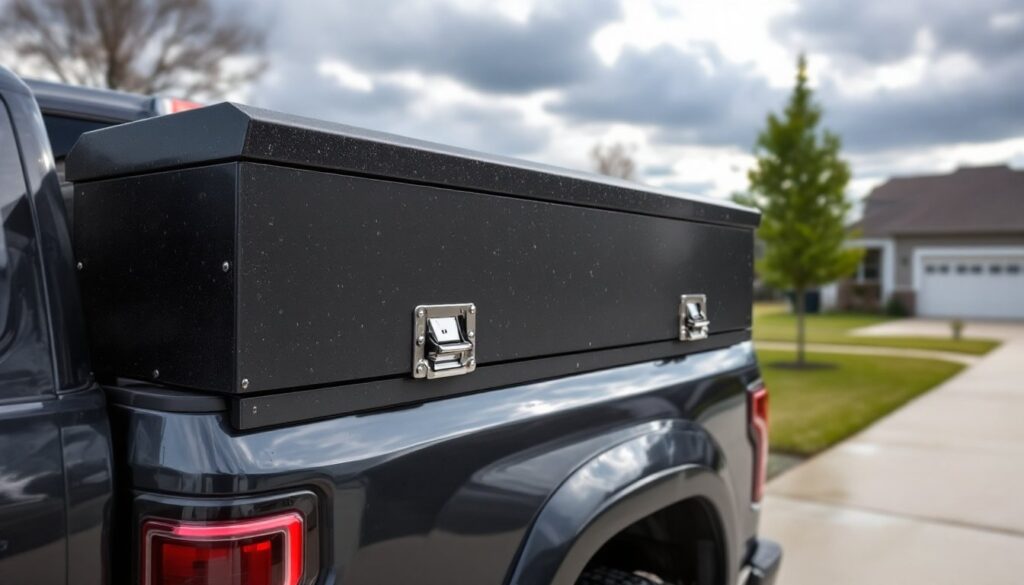
Waterproofing isn’t a single feature, it’s a system. A true waterproof truck bed storage box combines gasket seals, angled lids, drainage systems, and material selection to keep water completely out.
The gasket seal is the workhorse. Most quality boxes use dense rubber or neoprene gaskets that compress when the lid closes, creating an airtight and watertight barrier. As you tighten the latches, the gasket conforms to imperfections in the lid and body, blocking water entry even in heavy rain or car washes.
Lid design matters just as much. The best boxes angle slightly forward, allowing water to run off rather than pool. Some premium models feature a raised lip or drip edge that further diverts water away from seams. Interior drainage channels or small drain holes (usually plugged) allow any condensation to escape without pooling inside.
Material choice affects longevity. Aluminum boxes resist rust completely and are lightweight, though dents are permanent. Steel boxes with powder-coated finishes offer durability but require annual inspection for corrosion. Polyethylene plastic boxes are affordable and UV-resistant but can crack in extreme cold. Cross-link polyethylene (a thicker, reinforced plastic) splits the difference: cheaper than aluminum but tougher than standard plastic.
Key Features to Look For When Shopping
Beyond waterproofing, several features separate a good truck bed storage box from a great one.
Lock type is critical if you’re storing valuable tools. T-handle locks are quick but easier to pry. Keyed locks or combination locks with reinforced hasps provide real security. Locking latches on all sides, not just the front, prevent the lid from being pried up from the edges.
Internal organization saves time. Dividers, tool trays, or foam inserts keep items from shifting. A lid-mounted shelf or net pocket gains overhead storage without sacrificing base space.
Load rating must match your truck. Check the manufacturer’s weight limit, usually printed on a label inside the box. Don’t assume all boxes handle the same load: a small cross-bed box might support only 100 pounds, while a full-size unit handles 300+.
Weatherstripping condition determines longevity. New boxes should have clearly visible, firm gaskets. If gaskets are compressed, wavy, or separating, that box has been on the shelf too long or is a returned item. Replacement gasket kits are available but add cost.
Material and Durability Standards
Aluminum (typically 0.125 to 0.25 inches thick) resists weather indefinitely. It’s popular for professional contractors who depend on tool protection. Downside: more expensive ($600–$1,500) and louder when loaded.
Steel with baked enamel or powder-coat finishes provides good durability if maintained. Inspect annually for chips or rust starting points. These typically cost $400–$900 and feel sturdier underfoot.
Polyethylene boxes, especially rotomolded or cross-linked versions, offer best value ($200–$600). They’re quiet, lightweight, and won’t rust, but UV fading and cracking in extreme climates are real concerns. Look for UV inhibitors in the material spec. Many models with truck bed organizer solutions found in comprehensive guides use polyethylene as the starting point for budget-friendly setups.
Popular Storage Solutions for Different Truck Types
Truck bed dimensions vary widely, so storage box fit is everything.
Full-size trucks (RAM 1500, Ford F-150, Chevy Silverado) typically have a 5.5- to 6.5-foot bed. Cross-bed boxes (48–60 inches wide) stretch wheel-to-wheel and mount to the bed rails, maximizing usable space. Some owners prefer a side-mount box (10–20 inches deep) that leaves the bed partially open for longer items. Full-width boxes start around $400 for polyethylene and climb to $1,200+ for aluminum.
Mid-size trucks (Tacoma, Frontier, Gladiator) often work better with compact units (48 inches or less). These boxes fit the shorter bed without overhang and are easier to lift items from. At this size, installation is usually a two-person job, aluminum and steel boxes weigh 80–150 pounds empty.
Compact or used trucks have unique bed shapes. Measure your actual bed length and width before shopping: don’t assume “5-foot bed” is standard. Some aftermarket boxes don’t fit all body styles. Check fitment with the manufacturer before buying.
A few owners DIY their storage using woodworking project plans to build custom boxes, but store-bought units with tested gaskets and reinforced corners are far more reliable for real waterproofing.
Installation and Maintenance Tips
Most waterproof truck bed storage boxes mount directly to existing bed rails using clamps or bolts. Installation typically takes 30–60 minutes and requires basic tools: socket set, wrench, and drill (if holes need enlarging).
Before installation, clean the bed thoroughly. Dust, dirt, or debris under the box will cause rocking and compromise the gasket seal. Use a vacuum and a damp cloth to remove grit from the rail surfaces.
Check gasket condition before tightening latches fully. The gasket should be evenly compressed all around. If one side feels loose, loosen the latch, wiggle the box, and re-tighten. Many warranty claims come from people who just slam it shut without checking.
Mounting hardware matters. Use stainless steel or galvanized bolts and clamps, never bare steel. Rust on hardware spreads to the box body over time. Tighten all fasteners in a cross pattern (like wheel lug nuts) to 15–20 foot-pounds. Over-tightening can warp the box or crack the rail attachment points.
Maintenance is minimal but important. Rinse the exterior monthly, especially after off-roading or salty conditions. Once or twice yearly, open the box, wipe down the gasket with a dry cloth, and inspect for cracks or gaps. If water spots appear inside after rain, the gasket may need replacing (usually $50–$150 in parts, DIY-friendly with basic tools).
Lubricate locks annually with silicone spray (not WD-40, which attracts dust). Clean debris from latches so they seat fully. A well-maintained box stays watertight for 10+ years: neglect kills it in half that time.
How to Choose the Right Size and Capacity
Choosing the right size comes down to two questions: What are you storing? How much weight can your truck bed handle?
Cross-bed boxes (48–60 inches wide, 18–24 inches deep, 12–18 inches tall) offer maximum usable volume but eliminate access to the bed center. These are ideal if you use the box as your primary storage for the season (tools, camping gear, or work supplies). Capacity typically ranges from 15 to 35 cubic feet.
Side-mount boxes (18–30 inches wide, 12–20 inches deep) let you stack items beside the box, keeping bed space open. They’re better for occasional storage or if you haul long materials frequently. Capacity ranges from 5 to 15 cubic feet.
Depth matters practically. A 12-inch-deep box holds hand tools and small items. A 24-inch-deep box accommodates power tools, safety equipment, or camping gear. Measure your typical load before buying, an oversized box wastes space and money.
Weight limits are real constraints. Manufacturers publish maximum distributed load (usually per rail). A 200-pound box plus 100 pounds of contents × 2 means 150 pounds per side on most trucks. Distribute heavy items toward the center and back wheels to avoid tongue weight issues on trailers. Consult your truck’s manual for bed load ratings, they vary significantly by model and year.
When you’re ready to compare options in depth, look to weatherproof storage solutions to see how waterproof boxes fit into broader outdoor and vehicle storage strategies.
Conclusion
A waterproof truck bed storage box is a practical investment, not a luxury. It protects gear, secures valuables, and frees up interior cabin space, genuine benefits for anyone who uses a truck regularly. The best choice balances material durability, waterproof design (gaskets and drainage), security features, and your specific truck and storage needs. Measure first, check load ratings, and install carefully. Maintain the gasket seal, and your box will serve reliably for years.