Table of Contents
ToggleA cluttered truck bed wastes space, hides tools, and leaves expensive equipment exposed to the elements. Whether you’re a contractor hauling tools daily or a weekend warrior storing camping gear, the right truck bed storage box keeps everything organized, protected, and within arm’s reach. This guide walks you through the options available today, the features that matter most, and how to install one yourself, no contractor markup required.
Key Takeaways
- Truck bed storage boxes protect your tools and gear from weather, theft, and damage while keeping everything organized and within reach, justifying their $150–$1,500+ investment with 10+ years of durability.
- Three main types of truck bed storage boxes suit different needs: portable aluminum chests for contractors, bed rails with tie-down systems for flexible storage, and cross-bed boxes for maximizing space on heavy-hauling trucks.
- When selecting a storage box, prioritize weather-resistant materials, secure locking mechanisms, proper bed compatibility, and drainage features to prevent moisture and rust damage.
- DIY installation of truck bed storage boxes is achievable with basic hand tools—portable chests require only tie-down straps, while bed rails and cross-bed boxes need careful drilling with stainless steel bolts and proper torque specifications.
- Quality truck bed storage boxes improve safety by preventing loose items from becoming hazards during driving while securing cargo against theft on job sites and overnight parking.
Why Truck Bed Storage Boxes Are Worth the Investment
A truck bed storage box does more than stack belongings neatly. It protects your tools and gear from weather, theft, and damage, critical when you’re storing power tools, documents, or camping equipment worth hundreds of dollars. Weather seals on quality boxes keep moisture and dust out, extending the life of what’s inside. Organized storage also saves time: you know exactly where your impact driver is instead of shuffling through a tangled mess of cords and cases.
Beyond practicality, bed storage boxes improve safety. Loose items bouncing around a moving truck bed can shift, slide during hard stops, or even become projectiles in an accident. Securing gear in a locked box keeps it stable and prevents theft on job sites or during overnight parking. For those pulling trailers or hauling loads regularly, a well-secured cargo area is a legal and insurance-friendly move.
The upfront cost varies widely, anywhere from $150 for a basic polymer chest to $1,500+ for aluminum cross-bed models, but the durability and protection justify the expense for serious DIYers and professionals. Most boxes last 10+ years with minimal maintenance.
Types of Truck Bed Storage Boxes: Find Your Perfect Fit
Truck bed storage boxes come in several distinct types, each suited to different needs and truck configurations. Understanding the pros and cons of each helps you choose wisely.
Tool Boxes and Portable Chests
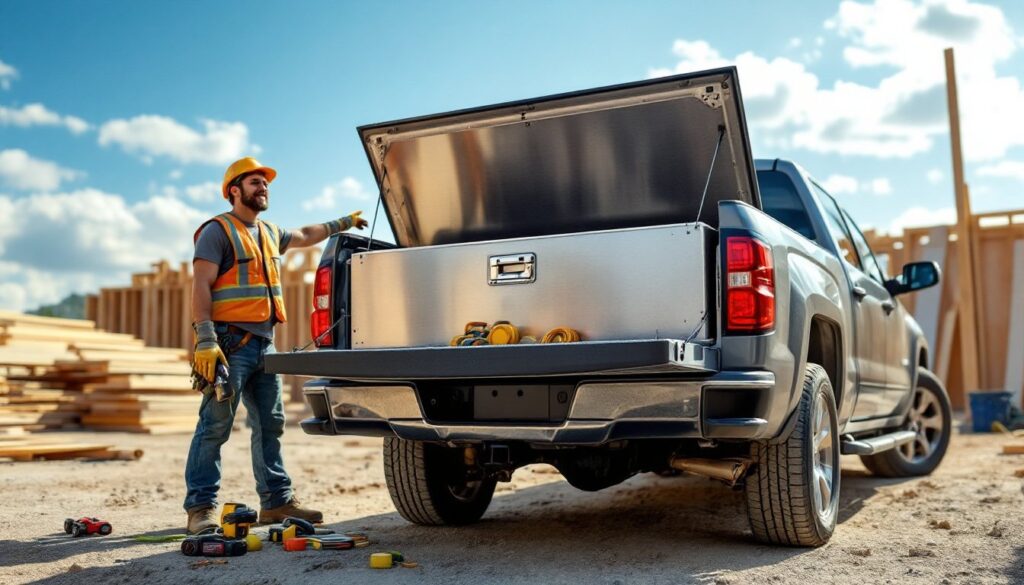
Portable tool boxes and aluminum chests are the workhorses for contractors and tool-heavy users. These sit loose in the truck bed, secured with tie-downs or brackets. Aluminum chests are durable, lightweight, and resist rust, perfect for outdoor exposure. Steel tool boxes cost less but require paint or coating to prevent corrosion. Plastic or poly tool chests are affordable entry points but less durable in heavy-use environments.
Portable chests shine because you can remove them entirely if you need full bed space for lumber or drywall. Many professionals recommend checking Popular Mechanics’ roundup of the best truck toolboxes for detailed comparisons of top models. These boxes range from 3 to 7 feet in length and typically cost $200–$800 depending on material and locking mechanisms.
Bed Rails and Tie-Down Systems
Bed rails with integrated tie-down points let you customize storage by adding your own boxes, bins, or shelving. They mount to the truck bed’s sides and don’t occupy usable bed space like a full cross-bed box would. This modular approach works well if your storage needs vary week to week. Quality bed rails run $300–$600 and take about 2–3 hours to install with basic hand tools.
Combining bed rails with Home Depot Storage boxes or smaller chests gives you flexibility without the permanent footprint of a welded-on box.
Key Features to Consider When Selecting a Storage Box
Material and weather resistance top the list. Aluminum boxes handle wet climates better than steel, but both require drainage holes and gaskets to keep water from pooling inside. Polymer or plastic boxes won’t rust, though they can crack in extreme cold or direct sun over many years. Check the manufacturer’s temperature rating if you live in a harsh climate.
Locking mechanisms matter if security is a priority. Lever locks are quick but basic: keyed locks or combination locks provide better theft deterrence. Many professionals use dual-lock systems (padlock + internal latch) for high-value tool storage.
Size and bed compatibility are non-negotiable. Measure your truck bed carefully: width (typically 5’6″–6’6″), length, and sidewall height. Cross-bed boxes usually fit beds 6’–8′ long, while side-mount or bed-rail systems adapt to various configurations. Check the manufacturer’s fit specs for your truck model and year.
Lid design affects usability. Hinged lids that open upward are standard and allow one-handed access. Tilting lids on some portable chests let you prop them open at an angle. Dual lids split the box lengthwise, letting two people access opposite ends simultaneously. Weight capacity is critical if you’re stacking or carrying heavy gear.
Drainage and ventilation prevent mold and moisture accumulation. Look for boxes with corner drain holes and rubber gaskets around lids. Some premium models include tray dividers or removable shelving, useful for organizing smaller tools without them sliding around.
Installation Tips for DIY Success
Installation complexity depends on your box type. Portable chests need only tie-down straps or ratchet straps anchored to the truck bed’s factory tie-down points. Thread straps through the box handles or around its base, then secure them firmly so the box doesn’t shift during acceleration, braking, or cornering. Test it before loading: rock the box by hand, it should barely budge.
Bed rails require more work. You’ll drill mounting holes through the truck bed’s side rails, using stainless steel bolts (½-inch diameter is typical) and lock washers to prevent loosening from vibration. Use a drill bit sized for a snug fit: oversized holes leak and weaken the connection. Install all fasteners before tightening fully, then go around a second time in a star pattern to ensure even pressure. This prevents warping the aluminum rail.
For cross-bed boxes or full-width models, you may need a helper. These typically bolt to existing bed mounting brackets or require drilling new holes. Follow the manufacturer’s torque specs exactly, over-tightening can crack aluminum flanges, and under-tightening leaves movement. Check bolts and fasteners monthly during heavy use: vibration and temperature cycling loosen them naturally.
Safety first: wear safety glasses when drilling, and use a center punch to mark holes precisely before drilling. If your truck bed is galvanized or powder-coated, drilling voids that protective layer at the bolt hole. Coat fresh holes with touch-up paint or a protective compound to prevent rust.
Need inspiration? Instructables offers step-by-step DIY project tutorials that cover custom truck bed modifications, though always verify your truck’s structural limits before improvising.
Permits aren’t typically required for storage box installation on personal trucks, but commercial work, especially if the truck carries hazardous materials, may have DOT or OSHA compliance requirements. Check your local regulations if the truck is registered for business use.
Conclusion
Choosing the right truck bed storage box comes down to matching your priorities: portability, security, durability, and budget. Start by assessing what you’ll actually store, how often you need to access it, and how harsh your climate is. Portable aluminum chests work for light-duty users: bed rails and modular systems suit varied needs: cross-bed boxes maximize space for heavy haulers. Installation is straightforward for most DIYers, secure fasteners, use proper tools, and test your work before hitting the road. Resources like The Handyman’s Daughter’s home repair tutorials can walk you through any installation questions. A quality truck bed storage box pays for itself in peace of mind and protected gear.