Table of Contents
ToggleWine storage doesn’t have to mean cramming bottles into a dusty corner or relegating them to the basement. If you’re building a kitchen that reflects who you actually are, someone who enjoys good wine and values functionality, storing it thoughtfully right where you cook makes perfect sense. Smart wine storage in kitchen spaces solves a real problem: bottles need consistent temperature, minimal vibration, and easy access without taking up valuable counter or cabinet real estate. Whether you’re designing a new kitchen, refreshing an existing one, or simply tired of wine rolling around in your fridge door, these practical storage ideas work for any budget and space constraint. We’ll walk through seven proven approaches that homeowners and DIY enthusiasts are using in 2026 to integrate wine storage seamlessly into their kitchens.
Key Takeaways
- Under-cabinet wine racks maximize hidden space between cabinets and countertops, holding 3–6 bottles per rack for wines you’ll enjoy within weeks, at just $25–$60 per unit.
- Wall-mounted wine storage ideas require secure stud mounting with structural fasteners since loaded shelves weigh 15–20 pounds, and floating shelves offer cleaner lines than traditional displays.
- Kitchen island wine storage integrates wine cubbies directly into cabinetry during renovation, creating a functional focal point that combines storage with interior design impact.
- Wine refrigerators are essential for serious collectors, maintaining optimal 50–65°F temperatures that regular kitchen appliances cannot provide, with single-zone models starting at $300–$600.
- Counter-top and freestanding wine racks work best for renters and small kitchens where permanent installation isn’t possible, offering flexibility to adjust placement as your layout changes.
- Choosing the right wine storage solution depends on measuring available space, counting your typical bottle volume, and considering your kitchen’s aesthetic and whether you’ll expand your collection over time.
Under-Cabinet Wine Racks: Maximizing Hidden Space
One of the smartest moves for wine storage in kitchen design is tucking bottles under your base cabinets. This approach reclaims unused air between the cabinet bottom and countertop, typically 8 to 12 inches of wasted space. Under-cabinet wine racks slide or screw directly to the cabinet underside, keeping bottles horizontal (the position that keeps corks moist and seals intact) while staying out of sight until you need them.
Installation is straightforward for a confident DIYer. Most under-cabinet racks come with mounting brackets and hardware. Use a stud finder to locate solid substrate (the cabinet frame itself, not just the veneer), then drill pilot holes to prevent splitting. A cordless drill-driver with a Phillips bit works perfectly here. If your cabinets have laminate undersides, predrill with a 1/16-inch bit to avoid tear-out. The whole job typically takes under an hour and requires no special skills.
Capacity runs from 3 to 6 bottles per rack depending on width. For a standard 36-inch run of base cabinets, you could fit two racks holding 12 bottles total. The bottles stay cool from proximity to the cabinet interior, though these aren’t climate-controlled, ideal for wines you’ll drink within a few weeks, not collector bottles. Materials range from wrought iron to stainless steel, with wrought iron offering a more tailored kitchen look. Expect to spend $25 to $60 per rack depending on depth and finish.
Wall-Mounted Wine Shelving for Style and Efficiency
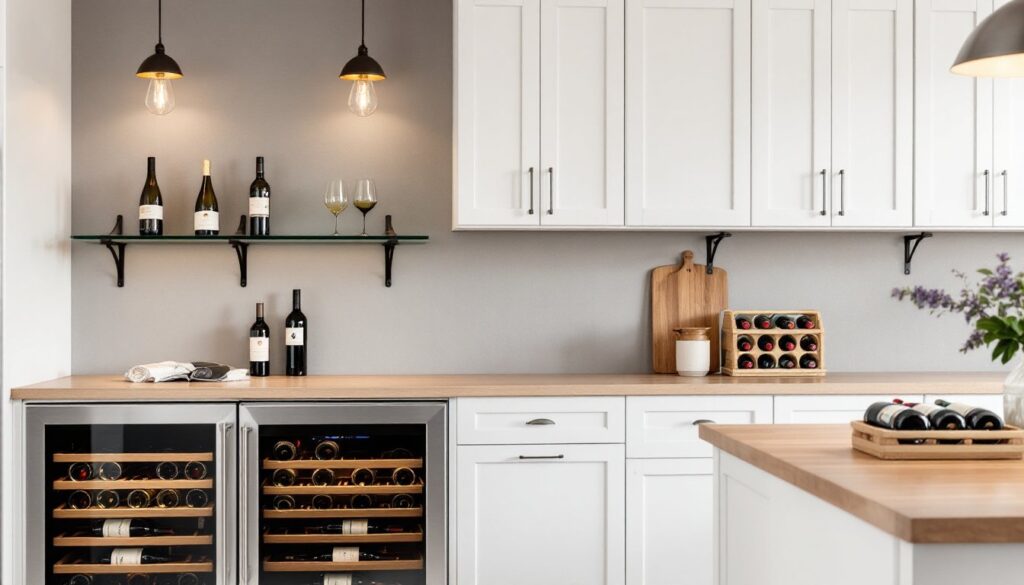
Wall-mounted shelving puts wine on display while freeing up cabinet and counter space, a smart dual-purpose move for open-concept kitchens. Unlike under-cabinet racks, wall shelves give you vertical real estate and create a focal point that says “I’m intentional about this.”
Proper installation is essential here because wine bottles are heavy. A typical 6-bottle wine shelf, fully loaded, weighs 15 to 20 pounds. Locate the wall studs using a stud finder and mount brackets directly to studs using 3/8-inch lag bolts or structural screws. Never rely on drywall anchors alone: they’ll fail. If studs don’t align with your desired shelf location, install a horizontal blocking board (a 2×4 or 2×6 sandwiched between studs) and anchor into that. This is load-bearing work, if you’re unsure about stud locations or structural fastening, don’t guess: call a pro.
Modern Floating Shelves vs. Traditional Wine Displays
Floating shelves offer clean lines and create an airy feel: the mounting hardware stays hidden behind the shelf itself, so you see only the wine and shelf edge. These work beautifully in contemporary or minimalist kitchens. Traditional wine displays (open wine racks, wine cubbies, or grid systems) show the entire structure and add rustic or transitional charm. Floating shelves typically cost $40 to $120 per shelf, while traditional cubbies range $80 to $200+. Floating shelves are easier to install and adjust height, while traditional displays anchor a design statement more deliberately. For wine storage in kitchen spaces with limited wall real estate, floating shelves maximize visual impact without bulk. Both options work: the choice depends on your kitchen’s style and how much “statement” you want wine storage to make.
Counter-Top Wine Storage Solutions for Small Kitchens
Not every kitchen has space for under-cabinet racks or available wall studs. Counter-top wine storage, freestanding racks, wine holders, or compact shelving units, works beautifully in tight spaces and gives you flexibility to adjust placement later. A small tiered wine rack (3 to 5 bottles, typically 12 to 18 inches tall) sits neatly on a counter corner or kitchen island without looking cramped, and you can move it if you reconfigure your layout.
Look for counter-top solutions with a stable, wide footprint and non-slip feet to prevent tipping. Materials matter: bamboo or wood racks feel warm and blend into most kitchens, while metal racks (stainless steel or matte black) suit modern spaces. Avoid spindly designs: they photograph well but topple easily. Quality counter-top racks run $30 to $100 and hold 3 to 12 bottles depending on footprint. The downside is they occupy prime counter real estate, only workable if you have extra space or can combine wine storage with another function, like a decorative display that also holds your everyday bottles. These solutions are perfect for renters or anyone who doesn’t want permanent installation.
Kitchen Island Wine Storage: A Dual-Purpose Upgrade
If you have a kitchen island or are planning one, integrating wine storage directly into the island structure is a game-changer. Wine cubbies, open wine racks, or even a wine fridge built into the island side (the side facing your dining area or living room) combine function with interior design impact. Homeowners using custom built-in kitchen storage solutions report that island wine storage becomes a natural focal point and conversation starter.
Built-in island wine storage requires planning at the cabinetry stage. Standard wine rack openings are 5 inches wide and 20 inches tall (for horizontal bottles): your cabinet builder can route these cubbies into the island side panels. Installation is not a weekend DIY job, it’s part of the island construction, so plan for it during kitchen renovation. If your island is already built, you can add a freestanding wine rack to the side or end, but it won’t have the integrated, finished look. Alternatively, a under-island wine cooler (a small wine fridge that fits under the overhang) keeps bottles at the perfect temperature while keeping them accessible and out of sight. Expect to spend $500 to $2,500 for integrated cabinetry depending on how many bottle cubbies you want, or $400 to $800 for a quality under-island wine cooler.
Wine Refrigerators and Climate-Controlled Storage
If you collect wine or simply want bottles stored at optimal temperature (50 to 65°F, depending on varietal), a wine refrigerator is the only reliable option. Regular kitchen appliances, even high-end refrigerators, cycle too cold and have humidity that’s wrong for long-term wine storage. A dedicated wine cooler maintains consistent temperature and humidity without the vibration that damages aging wines.
Wine fridges come in two types: single-zone coolers (one temperature for all bottles) and dual-zone coolers (separate temps for red and white wines). Single-zone models are smaller, quieter, and start around $300 to $600 for 15 to 40 bottles: dual-zone models run $800 to $2,500+ depending on capacity. Undercounter models (fit under 36-inch counter openings) are popular for kitchens: countertop versions work if space is tight. Sizing matters: count your average bottle volume and choose a cooler with 20% extra capacity, it runs more efficiently and gives you room for new acquisitions. Installation is simple: plug in, set temperature, and let it stabilize for 4 hours before adding wine. Design-wise, kitchen design ideas and appliance reviews to see how other homeowners integrate wine coolers into their layouts. Stainless steel finishes blend with appliances: black and natural wood options suit different aesthetics. For serious collectors or anyone tired of guessing whether kitchen temperature is ruining good bottles, a wine fridge pays for itself through peace of mind.
Conclusion
Smart wine storage in kitchen design is no longer a luxury, it’s a practical choice that protects your investment, improves access, and adds visual interest. Whether you go with under-cabinet racks for hidden efficiency, wall-mounted shelves for display, a built-in island solution, or a climate-controlled wine fridge, the best option depends on your space, budget, and how many bottles you actually store. Start by measuring your available space, counting your typical wine volume, and considering whether you’ll add bottles over time. Most of these solutions are affordable, non-permanent, and worth trying. Pick one that fits your kitchen’s style and your workflow, and you’ll wonder how you ever stored wine any other way.