Table of Contents
ToggleA hydraulic lift storage bed isn’t just furniture, it’s a space-solving investment that transforms tight bedrooms into functional, organized retreats. Whether you’re squeezing into a studio apartment or maximizing a guest room, a full-size hydraulic lift storage bed lifts (literally) the burden of clutter while keeping frequently used items within arm’s reach. This guide walks you through what these beds are, why they work, how to choose the right one, and how to install it without calling in reinforcements.
Key Takeaways
- A full-size hydraulic lift storage bed consolidates furniture function into one piece, saving 40 to 60 cubic feet of storage space while protecting your back through smooth, controlled lifting mechanisms.
- Hydraulic lift storage beds range from $600 to $1,800 and offer long-term value by replacing multiple furniture pieces (dressers, nightstands, storage units), with affordable cylinder replacements ($80–$150) that extend the bed’s lifespan to 10+ years.
- Quality hydraulic lift beds use solid hardwood or plywood with hardwood veneer frames backed by 5- to 10-year cylinder warranties and lifetime frame warranties, making them durable alternatives to sagging traditional beds.
- Proper installation requires a level base, perpendicular cylinder alignment, and correct bolt torque to prevent uneven lifting, binding, or premature hydraulic system wear.
- Hydraulic lift storage beds dramatically improve accessibility compared to traditional under-bed storage, allowing you to stand comfortably and retrieve items without crawling or bending awkwardly.
What Is a Hydraulic Lift Storage Bed?
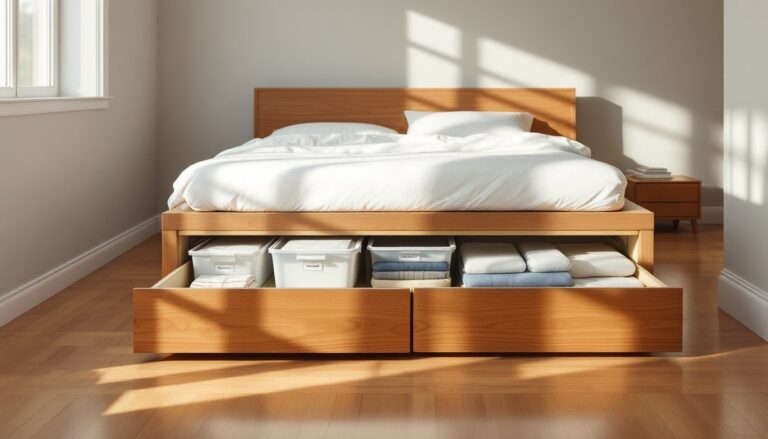
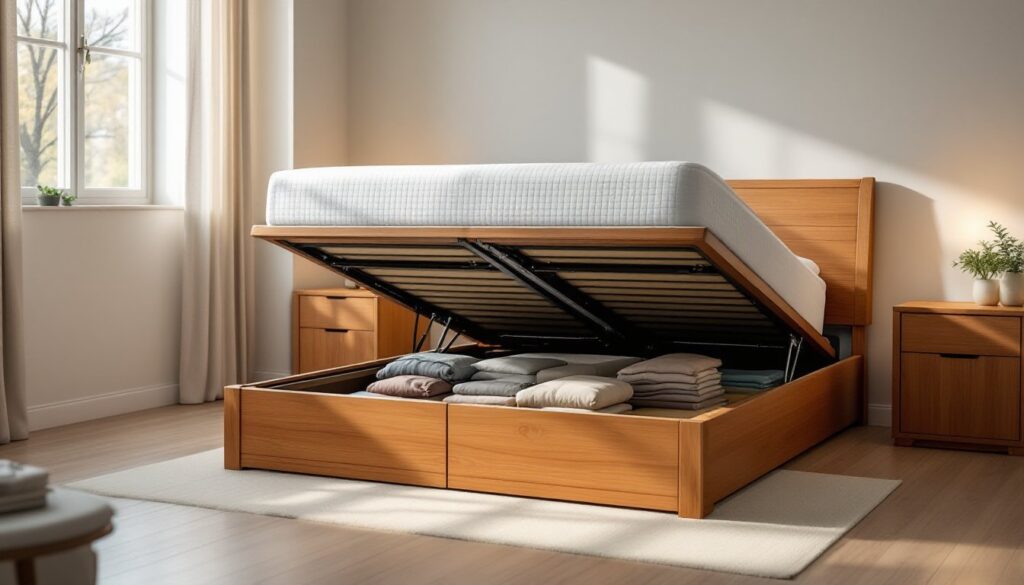
A hydraulic lift storage bed is a platform bed frame with a hollow base that stores gear, bedding, seasonal clothes, tools, or forgotten keepsakes, while the mattress platform sits on top. The hydraulic system (pressurized fluid in cylinders) provides smooth, controlled lifting, so you’re not straining your back or wrestling with a heavy frame every time you need something stashed below.
A full-size hydraulic lift storage bed typically measures 54 inches wide by 75 inches long (standard full mattress dimensions) and offers 12 to 18 inches of vertical clearance in the storage cavity. Unlike a basic under-bed box, the entire platform lifts together with the mattress, giving you unobstructed access to stored items. No more crawling or fishing around with a stick.
How Hydraulic Lift Mechanisms Work
Hydraulic lift systems use pressurized fluid (usually in two steel cylinders mounted beneath the bed frame) to support the weight of the platform and mattress. When you gently push up on the platform or pull on a handle, the valve opens, and the fluid redistributes, raising the bed. Release the pressure, and the system slowly lowers the platform back down, controlled and safe, without slamming.
The gas cylinders (or struts) are pre-charged at the factory to balance the typical weight of a mattress and light bedding. Some systems are adjustable by hand: others require professional servicing. This is why replacement parts and cylinder pressure matter: an undercharged cylinder forces you to muscle the bed up, and an overcharged one makes it pop up too aggressively. Most quality hydraulic beds hold steady on their own once fully lowered, so your storage area stays accessible without extra effort.
Key Benefits of Choosing a Hydraulic Lift Design
Hydraulic lift storage beds solve a real problem: they give you back bedroom floor space without sacrificing functionality. A small bedroom loses valuable real estate to dressers, shelving, and storage boxes. A hydraulic bed consolidates that into one multi-tasking piece.
The system also protects your back and shoulders. Lifting a flat platform or mattress by brute force is dangerous, even a lightweight full-size mattress (around 60 pounds) plus a wooden platform creates strain if you’re jerking it up by hand. The hydraulic cylinders do the heavy work, and you just guide the motion. This is especially important for older homeowners, people recovering from injury, or anyone with chronic pain in their shoulders or lower back.
Space Optimization and Accessibility
A full-size hydraulic lift storage bed can store 40 to 60 cubic feet of items, depending on the height and depth of the cavity. That’s roughly equivalent to a small dresser, a nightstand, and a closet shelf combined, reclaimed from thin air above your floor.
Accessibility is the real win here. Unlike traditional under-bed storage (which forces you to bend, crawl, or pull boxes out awkwardly), a hydraulic bed lifts the entire platform slowly and steadily. You can stand comfortably and grab what you need. For small bedrooms, guest rooms, or homes with limited closet space, this changes the game. You’re also less likely to store clutter you forget about: because accessing items is easy and painless, you actually use the storage strategically instead of shoving things under the bed and abandoning them.
Durability and Long-Term Value
A well-built hydraulic lift storage bed is a long-term investment. Quality frames use hardwood (oak, maple, or walnut) or sturdy plywood with a hardwood veneer, and the hydraulic cylinders are sealed and maintenance-free if manufactured to spec. Most reputable brands back their hydraulic systems with a 5- to 10-year warranty on the cylinders and a lifetime warranty on the frame itself.
The hydraulic cylinders are the critical wear point. Over time (years of daily use), they can lose charge and become sluggish. But, replacement cylinders cost $80 to $150 per pair and take 15 minutes to swap out, far cheaper than replacing a sagging, traditional bed frame. The frame itself, if constructed from solid hardwood or quality engineered wood, won’t sag or wobble like cheaper alternatives.
Because a hydraulic bed consolidates storage and eliminates the need for separate dressers or storage units, you’re also saving money on furniture purchases over the long haul. A typical bedroom dresser runs $300 to $800: a nightstand, $150 to $400. A quality full-size hydraulic lift storage bed ranges from $600 to $1,800, depending on materials and brand, and delivers the function of two or three pieces combined. You’re buying durable utility, not disposable fast furniture. Over 10 years, that difference compounds.
Selecting the Right Full-Size Hydraulic Lift Storage Bed
Choosing the right hydraulic lift storage bed means evaluating frame construction, hydraulic system quality, height, and your bedroom layout.
Frame Material: Solid hardwood (oak, maple) is sturdier and lasts longer than particle board or MDF, but it’s heavier and more expensive. Plywood with hardwood veneer is a solid middle ground. Avoid beds with particle board or MDF as the main platform, they sag, especially in damp climates, and the hydraulic system works harder to lift a compromised frame.
Hydraulic System: Check the warranty on cylinders and confirm they’re sealed and gas-charged (not oil-filled, which can leak). Some manufacturers allow you to adjust the charge yourself using a hand pump: others require a service call. Easier adjustment is better if you ever need to rebalance the system.
Height and Clearance: Measure your bedroom ceiling and doorways. A bed with 18 inches of storage clearance is ideal, but if your room is tight, 12 inches still works. Confirm the total height (frame plus mattress) doesn’t make the bed feel claustrophobic or block light from windows.
Mattress Compatibility: Full-size hydraulic beds accept standard full mattresses (54 × 75 inches). Confirm the frame’s top dimensions and ensure your mattress sits flush. A mattress that overhangs the frame looks sloppy and can shift when the bed lifts.
When you’re shopping, ask the manufacturer or retailer about weight capacity, typical hydraulic cylinder lifespan, and whether replacement parts are available. Full size storage bed frames from reputable makers publish these specs: if they don’t, that’s a red flag.
Installation Tips for DIY Success
Installing a hydraulic lift storage bed isn’t complicated, but it requires precision and a helper. Most manufacturers ship beds partially assembled: you’ll attach legs, position hydraulic cylinders, and secure the frame together.
Before You Start:
- Clear your bedroom floor completely. You need space to maneuver and assemble without tripping over clutter.
- Gather tools: adjustable wrench, socket set, level, and measuring tape. A stud finder isn’t necessary for bed assembly, but it’s helpful if you’re anchoring the frame to the wall (especially in seismic zones or if the bed feels tippy).
- Read the manufacturer’s manual twice. It sounds obvious, but misaligned cylinders or incorrect torque on fasteners cause problems down the road.
- Wear gloves and safety glasses. You’re handling metal parts and fasteners: a wrench slip or poking yourself in the eye isn’t fun.
Assembly Steps:
- Position the frame base on a level surface. Use a level to check front-to-back and side-to-side. An unlevel base will cause the hydraulic system to work unevenly and wear prematurely.
- Attach the four legs (or base supports) per the manual. Tighten fasteners firmly but don’t overtighten, you can crack wood or strip bolt holes.
- Install hydraulic cylinders in their designated slots. They typically bolt to the frame at the head and foot. Ensure the cylinders are perpendicular to the platform: misaligned cylinders drag and may fail.
- Secure the platform decking (usually plywood or slatted support) to the frame. Confirm it sits flat and all fasteners are snug.
- Test the lift mechanism before placing the mattress. Gently push up on the platform (without body weight) and confirm it rises and lowers smoothly and evenly. If one side rises faster, the cylinders may be misaligned or have uneven pressure.
- Place the mattress on top, centered. Stand back and visually confirm the bed looks level and stable.
Common Pitfalls:
- Skipping the level step: An unlevel frame causes the hydraulic system to bind and wear unevenly. Don’t skip this.
- Overtightening bolts: You can strip fastener holes or crack wood. Hand-tighten first, then use a wrench for a quarter-turn more.
- Misaligned cylinders: If the cylinders aren’t perfectly parallel to the frame rails, the platform will lift unevenly or stick. Double-check alignment before you consider the job done.
- Overloading the storage cavity immediately: Fresh hydraulic cylinders may take a few lift cycles to “break in.” Start with half the intended load for the first week.
If you’re uncomfortable with any step, especially aligning hydraulic cylinders or torquing fasteners, this is the moment to call in help. A handy friend or a furniture assembly service (many big-box stores offer this for $50 to $100) is worth the investment to avoid a wobbly, unsafe bed. DIY furniture building guides and community project tutorials often walk through similar assembly tasks with photos if you want a visual reference.