Table of Contents
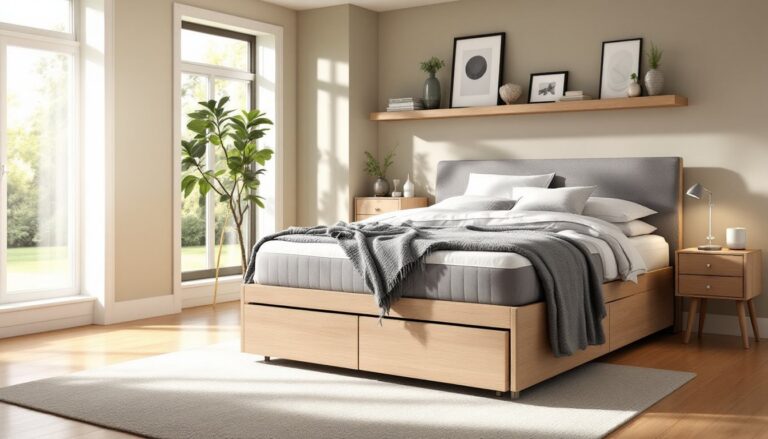
ToggleA king bed doesn’t have to sacrifice storage, and neither should your bedroom layout. Whether you’re working with a modest master suite or furnishing a first home, a king bed with storage underneath solves a common DIY dilemma: maximizing floor space without cramping your sleeping quarters. Modern king beds with under-bed storage range from built-in drawer systems to hydraulic lift frames, giving you functional square footage without the visual clutter of standalone dressers or shelving units. If you’ve been torn between wanting a spacious bed and needing room to breathe, this guide walks you through the types, benefits, and organization strategies that make this investment work.
Key Takeaways
- A king bed with storage underneath combines spacious sleeping comfort with hidden organization, solving the challenge of maximizing bedroom floor space without bulky separate furniture.
- Platform beds with drawers and hydraulic lift-top frames are the two main types of king beds with storage, each offering different access patterns—drawers suit frequent use while lift-tops provide bulk storage for seasonal items.
- Organizing under-bed storage effectively requires intentional planning: use clear labeled containers, vacuum-seal bags to compress items, and strategic weight distribution to prevent strain on the bed structure.
- A king bed with storage underneath typically costs less than purchasing a separate bed plus dresser or storage unit, making it a budget-friendly solution for bedroom furnishings.
- Climate control and container selection matter significantly—sealed plastic bins with moisture absorbers protect stored items from humidity and mildew better than open boxes.
- Access patterns should guide placement of items, with frequently-needed seasonal goods positioned in the most accessible drawers and rarely-used items stored toward the back or harder-to-reach sections.
Why Choose a King Bed With Under-Bed Storage
A king bed with storage underneath tackles two problems at once: you get the comfort and sleeping surface of a king, plus hidden storage that doesn’t eat up floor space. For anyone living in homes where square footage is at a premium, condos, townhouses, master bedrooms with limited wall real estate, this is practical math.
The appeal goes beyond numbers. Clutter creeps into bedrooms, and traditional under-bed space often becomes a dead zone of forgotten boxes and dust bunnies. A structured storage system forces intentionality. You’re more likely to keep only what you actually use, and items stay organized rather than forgotten. Seasonal clothes, extra bedding, or rarely-used items have a designated home instead of migrating to a closet already bulging at the seams.
From a design angle, a bed with integrated storage keeps your bedroom floor plan clean. You’re not squeezing in a second dresser, a bench at the foot of the bed, or shoving a storage ottoman in the corner. The visual impact is calm and open, which matters when your bedroom is also your refuge after a long day.
Budget-wise, a king bed with storage often costs less than buying a separate bed plus a dresser or storage unit. Depending on the type and construction quality, you’re consolidating two pieces of furniture into one. That’s money and floor space saved, especially valuable if you’re outfitting a bedroom from scratch.
Types of King Beds With Storage Options
Platform Beds With Built-In Drawers
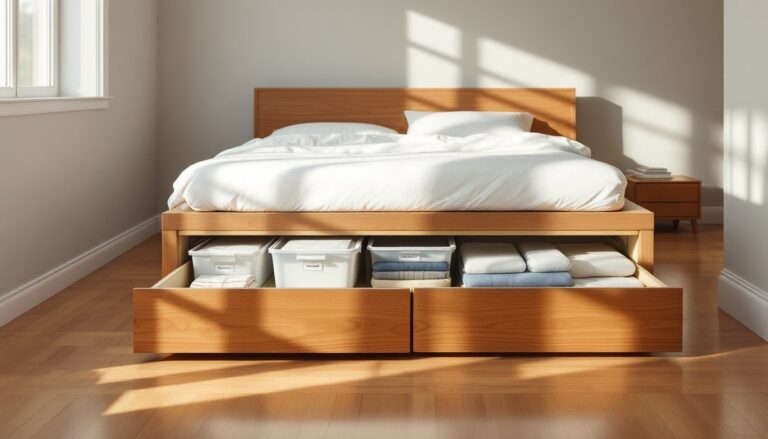
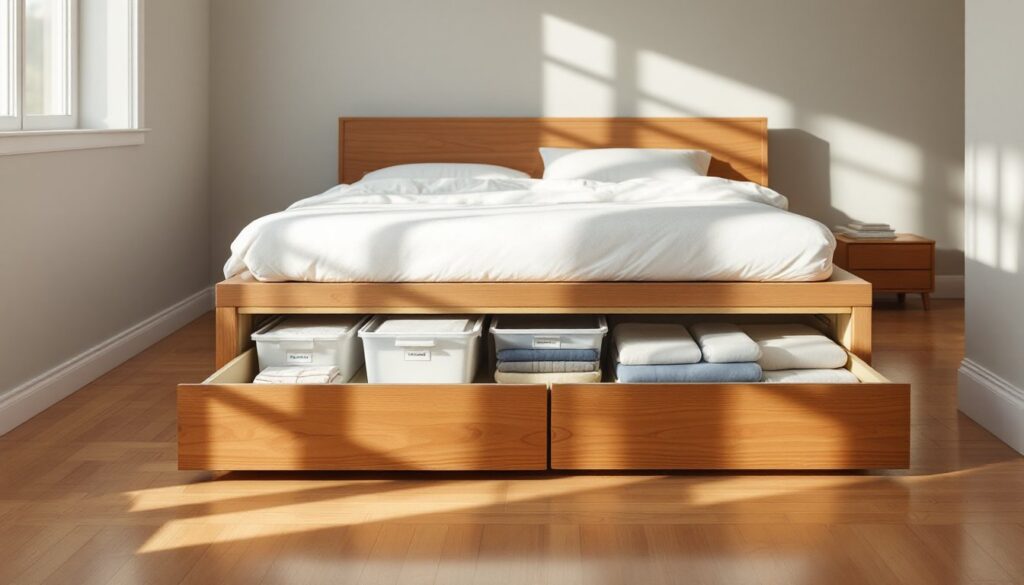
Platform beds with drawers are the workhorse of under-bed storage. Instead of a traditional frame with a box spring and mattress sitting on top, a platform bed is essentially a low box, usually 12 to 24 inches tall, with a solid or slatted surface that holds the mattress directly. Drawers slot underneath or along the sides, accessed by rolling them out like filing cabinets.
The beauty of platform beds is simplicity. You’re not managing a separate box spring, which simplifies setup and allows the storage to sit flush with the floor. Quality matters here: solid wood platforms built with mortise-and-tenon joints or robust pocket hole joinery will outlast particle-board options. If you’re building one yourself, Ana White’s plans offer beginner-friendly instructions with tested measurements and a clear parts list.
Drawer capacity depends on size and depth. A single drawer running the full width of the bed might hold a queen’s worth of off-season clothing, while multiple smaller drawers give you more granular organization. Consider weight distribution: loaded drawers add mass, so ensure the platform is supported by solid legs at key points, not just the perimeter. If the bed will sit on carpet, use furniture sliders to protect the fibers and make rolling drawers smoother.
One trade-off: dust. Drawers reduce airflow, so use breathable storage bags or cedar blocks if you’re storing natural fibers long-term.
Lift-Top and Hydraulic Storage Frames
Lift-top beds take a different approach, the entire mattress platform hinges up, revealing a cavernous void underneath. Hydraulic struts hold the platform open so you can access storage without holding it above your head. Mechanically, it’s clever: the hydraulic cylinders (also called gas struts) are sized to support the mattress and support weight, so most adults can lift one side and have it stay put.
These beds shine if you need bulk storage for things you access infrequently, holiday decorations, guest bedding, luggage, or seasonal gear. A king lift-top frame typically offers 15 to 30 cubic feet of space, which dwarfs drawer capacity. The trade-off is access: you’re lifting the entire surface each time, not rolling out a drawer. For the occasional seasonal swap, that’s fine. For daily-use items, drawers are faster.
Quality hydraulics matter. Budget lift-top frames sometimes use weak struts that require both hands to hold up, or that slowly sink after a few years. Test the action in person if you can, or read reviews from people who’ve owned it a year or more. When it’s time to replace struts (typically after 10 to 15 years), ensure replacements are available at reasonable cost.
Finish matters too. A lift-top frame sits against your wall and draws attention, so wood stain or upholstered panels matter more aesthetically than they do on a low platform bed. Young House Love’s bedroom transformations often feature these beds as anchors for cozy, intentional spaces.
How to Maximize Storage and Organization
Once you’ve chosen your bed, the real work is organizing what goes underneath. A common mistake is treating the space like a junk drawer: if it fits, throw it in. That breeds chaos and wasted potential.
Start with an inventory. Decide what actually belongs under your bed. Seasonal clothes (winter coats, light sweaters), guest bedding, luggage, and off-season shoes are classics. Avoid moisture-prone items like papers, electronics, or books unless the space is truly sealed and dry. Humidity and darkness are enemies of fabric and cardboard, so don’t shove a damp storage box under and forget it.
Invest in containers. Clear plastic bins, fabric storage boxes, or vacuum-seal bags keep items visible, protected, and organized. Label everything. It sounds tedious, but “Guest Bed Sheets” is infinitely more useful than opening three bins to find what you need. Vacuum-seal bags compress bulky items like winter bedding or seasonal clothes by about 60%, maximizing space.
For drawer-based beds, dividers are your friend. A wide drawer crammed with folded shirts is chaos after a month. Dividers or even folded cardboard keep stacks upright and findable. The full size storage bed frame approach translates directly, the organizational principles work whether you’re working with a full or king.
Climate matters. Bedrooms tend to have temperature swings and humidity changes, especially in humid climates or basements. Sealed plastic containers protect better than open boxes. Cedar blocks or moisture absorbers (like silica gel) keep stored clothes fresh and protect against mildew if your room tends toward dampness.
Weight distribution is real. Don’t load all the heavy stuff into one drawer or one side of a lift-top bed. Distribute weight evenly across the platform. Heavy items (luggage, winter coats) toward the center or bed edges, lighter items in shallower or outer areas. This keeps the bed balanced and prevents stress on hinges or drawer slides.
Access patterns guide placement. Items you grab every season go in the most accessible drawer or front section. Off-season items or rarely-used stuff gets the back or a harder-to-reach spot. This is basic logistics, but it saves frustration when you need something at 6 a.m.
Conclusion
A king bed with storage underneath isn’t just a furniture hack, it’s a practical solution for bedrooms where every inch counts. Whether you build a platform with drawers or invest in a lift-top frame with hydraulic support, the result is more floor space and hidden storage that actually gets used because it’s organized and accessible. Measure your room, decide whether drawers or a lift-top suits your lifestyle, and commit to using the space intentionally. Your bedroom will breathe easier for it.
Resources like The Handyman’s Daughter offer solid DIY tutorials if you’re building from scratch, giving you confidence to tackle the project yourself.