Table of Contents
ToggleStorage beds have become a practical necessity for homeowners working with limited square footage. Whether you’re furnishing a starter apartment, a guest bedroom, or optimizing a master suite, a storage bed transforms wasted space under your mattress into functional real estate. Unlike traditional bed frames, storage beds combine sleeping and storage in one piece, eliminating the need for separate dressers or under-bed organizers. This dual-purpose approach saves money, reduces visual clutter, and makes furniture shopping simpler. For anyone serious about maximizing bedroom functionality without sacrificing style or comfort, understanding your storage bed options is the first step toward a smarter living space.
Key Takeaways
- A storage bed combines sleeping and storage in one piece, eliminating the need for separate dressers while saving money and reducing visual clutter in your bedroom.
- Three main types of storage beds—drawer systems, lift-top designs, and platform beds—each offer different benefits based on your space, access frequency, and storage capacity needs.
- The best storage bed depends on careful measurement of your room dimensions, height clearance, and honest assessment of whether you need frequent or seasonal access to stored items.
- Solid wood storage beds last significantly longer than particleboard options and typically support 800 to 1,000 pounds, making them a durable long-term investment.
- Proper organization using dividers, clear storage boxes, and regular seasonal rotation maximizes your storage bed’s potential while preventing odors, mildew, and unnecessary clutter.
What Makes a Storage Bed Essential for Modern Homes
A storage bed addresses a real problem: most bedrooms have underutilized vertical and horizontal space. Standard bed frames sit idle, storing nothing but dust and the occasional lost sock. In contrast, storage beds put that real estate to work, holding seasonal bedding, off-season clothing, shoes, books, or hobby supplies. This matters because bedroom square footage is expensive. In urban markets and growing suburbs, storage beds can eliminate the need for a separate bedroom closet organizer or additional furniture pieces.
Beyond the math, storage beds offer psychological benefits too. When belongings are tucked away neatly rather than stacked in corners or crammed into closets, a room feels calmer and more intentional. Bedrooms function better as rest spaces when they’re not cramped with miscellaneous items. For renters and first-time homeowners especially, a quality storage bed is a smart investment, it works in starter apartments and continues to earn its keep after you upgrade to a larger home.
Modern storage beds also come with better-designed hardware than the flimsy, squeaky models from a decade ago. Ball-bearing drawer slides, sturdy lift mechanisms, and solid-wood construction mean your bed won’t need replacing in three years. That durability translates to long-term savings and less waste.
Types of Storage Beds and Their Benefits
Under-Bed Drawer Systems
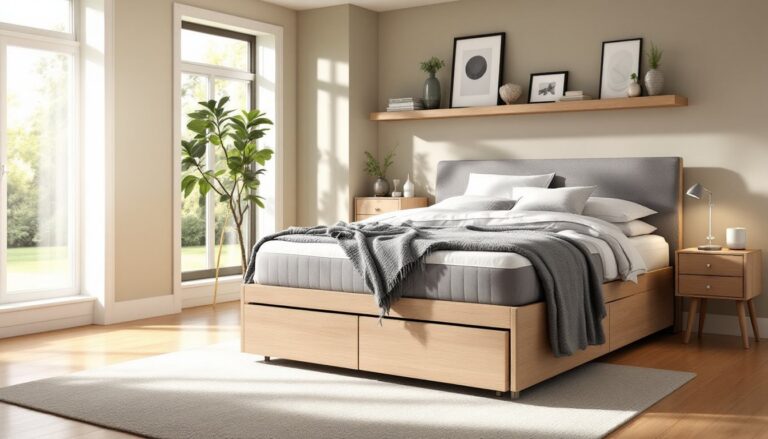
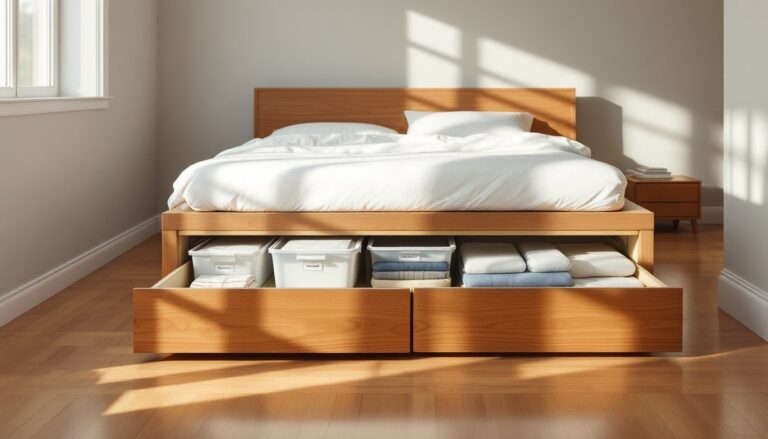
Drawer-style storage beds feature compartments built into the frame sides or foot, accessed by rolling or pulling them open. Most designs incorporate ball-bearing slides (the hardware tracks that allow smooth opening and closing) for reliable operation over years of use. Drawers typically range from 12 to 18 inches deep, offering ample room for folded linens, blankets, or seasonal items.
The advantage here is simplicity and visibility. You can see what’s stored without digging, and pulling out a drawer takes seconds. Drawers also work well in tight bedrooms where a lift mechanism might hit low-hanging light fixtures or ceiling fans. One trade-off: drawers consume side or end space, so they’re best suited for beds positioned away from walls. If your headboard sits flush against a wall, end-mounted drawers work better than side-mounted ones.
Drawer systems typically add $200 to $500 to the base cost of a bed frame, depending on the number of compartments and material quality. Solid wood frames (oak, cherry, or walnut) hold up better than particleboard, especially with frequent use. Particleboard can sag or splinter where drawer hardware is mounted, so avoid it for hardworking storage beds.
Lift-Top and Platform Storage Beds
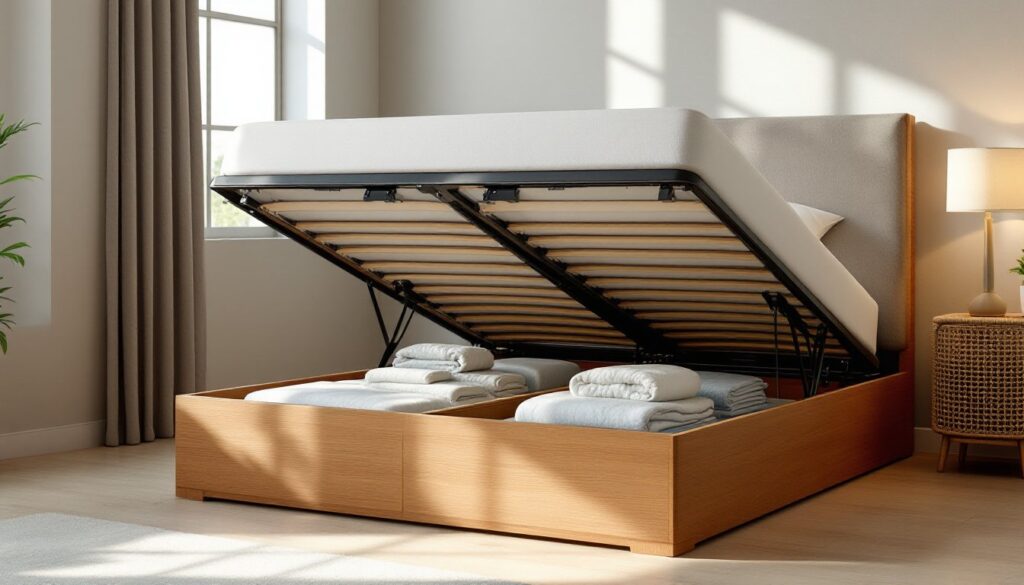
Lift-top designs feature a sprung or gas-assisted mechanism that raises the entire mattress platform, revealing a large storage cavity below. Some use manual spring hinges (requiring a bit of push force), while others use hydraulic gas struts (similar to car hood props) for effortless opening, even for heavier mattresses. These mechanisms typically support 200 to 400 pounds of mattress and bedding weight.
The benefit is sheer capacity. A queen-size lift-top bed can hold an entire season’s worth of clothes, extra pillows, and blankets, far more than drawer systems. The storage area is also unobstructed, so you can stack items flexibly. But, lift-tops require clearance above the bed. Low ceilings or overhead fixtures can become obstacles. You’ll also need a clear foot of space on at least one side to access and operate the lift fully.
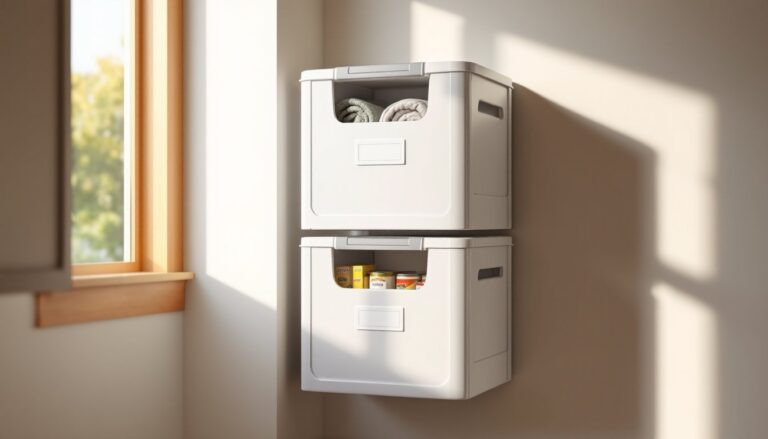
Platform storage beds offer a middle ground: a solid, 4 to 6-inch elevated base that functions as storage on its own. Instead of drawers or a lift mechanism, you slide storage boxes or bins underneath. Platform beds are simple, inexpensive, and highly flexible, you choose what goes underneath and can swap items without being locked into the bed’s built-in compartments. They work best if you’re pairing them with matching storage containers from storage bins at home improvement retailers to maintain a cohesive look.
How to Choose the Right Storage Bed for Your Space
Start by measuring your bedroom carefully: length, width, height to ceiling, and clearance around the bed. A queen-size bed frame measures approximately 60 inches wide by 80 inches long (nominal dimensions: actual width is usually 59.5 inches). If your room is under 10 feet wide, a queen or full-size bed is the maximum you should consider. Twin or full-size storage beds work better in compact spaces and guest rooms.
Next, assess your storage needs honestly. Do you need constant access to stored items, or are you stashing seasonal gear you touch twice a year? Drawers suit active, frequent-access storage: lift-tops suit long-term, seasonal storage. If you have a closet and dresser already, a drawer bed might be overkill. If you’re furnishing a studio or one-bedroom with minimal closet space, a lift-top makes more sense.
Consider the bed’s height too. Standard frames sit around 14 to 18 inches tall. Storage beds are often taller, sometimes 18 to 24 inches, because of the compartments. If you have a low ceiling, a tall bed will make your room feel cramped. Measure again before purchasing. For a deeper jump into space optimization, explore space-saving tiny home storage solutions which covers multi-functional furniture strategies.
Material choice matters. Solid wood (hardwood or plywood cores) lasts longer than particleboard or veneered MDF. Upholstered beds hide dust but can retain odors: platform and wooden frames are easier to clean. Finally, check weight ratings, most quality storage beds support 800 to 1,000 pounds, but confirm this if you’re a heavier sleeper or plan to share the bed regularly.
If you’re handy, DIY options exist. Step-by-step plans for a farmhouse storage bed with drawers are available online for those comfortable with woodworking. Alternatively, platforms like IKEA’s modular bed system allow customization through hacks and add-on drawers, which works well for renters.
Maximizing Your Storage Bed’s Potential
Once you’ve chosen your storage bed, organize intentionally. Use clear plastic storage boxes or dividers to compartmentalize drawers, socks and underwear take up far less space than rolled sweaters, and dividing them prevents chaos when you’re hunting for something in a rush. Label boxes on the side and front so you can see contents without opening them.
Rotate seasonal items on a schedule. Summer linens and winter blankets don’t need year-round accessibility. Pull them out every six months, check for moisture or pests, and restack neatly. For lift-top beds, place heavier items at the bottom and lighter ones on top to maintain balance and prevent the lid from slamming.
Don’t overstuff. Storage doesn’t mean “stuffing.” A bed laden with excessive weight becomes harder to clean around and can stress the frame over time. Aim for 75 percent capacity maximum. This leaves room for new items and prevents the bed from looking or feeling lumpy.
Keep the space under the bed clean and dry. Dust mites and moisture love undisturbed dark spaces. Vacuum or sweep occasionally, and avoid storing anything damp or prone to mold. If you live in a humid climate, consider a small rechargeable dehumidifier packet in storage compartments. These inexpensive tools prevent odors and mildew.
For comprehensive organizational strategies, the team at Hearth Home Vibe’s smart storage solutions guide covers broader decluttering and organizing systems that pair perfectly with furniture-based storage beds. When furniture and organization work together, the results are remarkable.
Conclusion
A storage bed is more than a furniture purchase, it’s an investment in bedroom functionality and peace of mind. Whether you choose drawers for accessibility, a lift-top for capacity, or a platform for flexibility, the right storage bed adapts to your life and space. Measure carefully, match your storage needs to the design, and maintain it properly. In small spaces and large bedrooms alike, a well-chosen storage bed earns its place through years of practical service. Start your search with a clear sense of your priorities, and you’ll find a solution that works.