Table of Contents
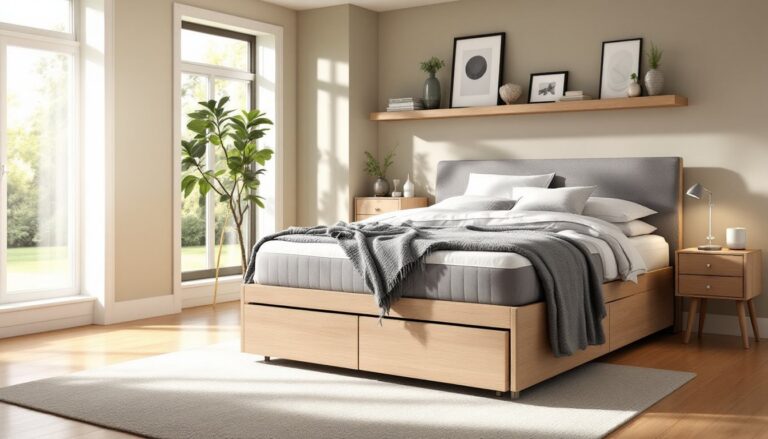
ToggleA girl’s bedroom often serves double duty: it’s a sleeping space, study zone, and personal sanctuary all rolled into one. When square footage is tight, whether in a small house, apartment, or shared room, storage becomes non-negotiable. Storage beds tackle this challenge head-on by combining a sleeping platform with built-in drawers, shelving, or loft space underneath. Rather than eating up floor space with a dresser and a separate nightstand, a storage bed does the heavy lifting. This guide walks through why storage beds make sense for girls’ bedrooms, what styles work best, and how to pick the right one for your space.
Key Takeaways
- A girls bed with storage combines sleeping space with built-in drawers or loft designs, eliminating the need for separate dressers and freeing up valuable floor space in small rooms.
- Full-extension ball-bearing drawer slides are essential for durability and smooth operation; cheap plastic or partial-extension slides wear out quickly and should be avoided.
- Loft beds require at least 8.5 feet of ceiling clearance and sturdy construction with guardrails for safety, making them ideal for teens who need both sleeping and work zones.
- Solid plywood or hardwood construction outlasts particle-board frames, and swapping hardware like drawer knobs for quality alternatives instantly upgrades the look of a storage bed.
- Measuring room dimensions, ceiling height, and traffic flow before purchase ensures a girls bed with storage fits functionally without blocking closet or bathroom access.
- A neutral wood or metal frame in classic style ages better than trendy colors and allows for flexibility in future room redesigns through modular components and replaceable drawers.
Why Storage Beds Are Essential for Girls’ Bedrooms
Storage beds solve the age-old problem: kids accumulate stuff, clothes, books, sports gear, school projects, hobby supplies. A standard bed frame offers zero storage. A storage bed leverages the largest empty space in most rooms, the area directly under the mattress.
From a practical standpoint, storage beds eliminate the need for an extra dresser or storage chest, freeing up floor space for a desk, reading nook, or simply room to move around. In small bedrooms, that floor space is golden. A girl can get dressed without tripping over drawers, and parents can access clean laundry storage without rearranging furniture.
Beyond space savings, storage beds teach organizational skills early. When a child has a dedicated place for her things, and that place is right under her bed, she’s more likely to keep things organized. It’s not nagging: it’s just convenient.
Storage beds also tend to be more durable than cheap particle-board dressers. A solid wood or high-quality plywood bed frame with drawer slides handles years of opening and closing. And unlike a dresser that gets shoved around, a bed stays put, so hinges and drawer mechanisms don’t take unnecessary abuse.
Popular Storage Bed Styles and Designs
Under-Bed Drawers and Pull-Out Options
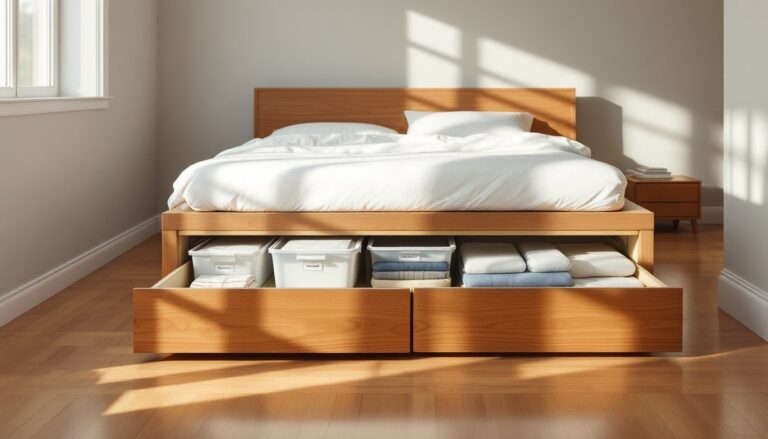
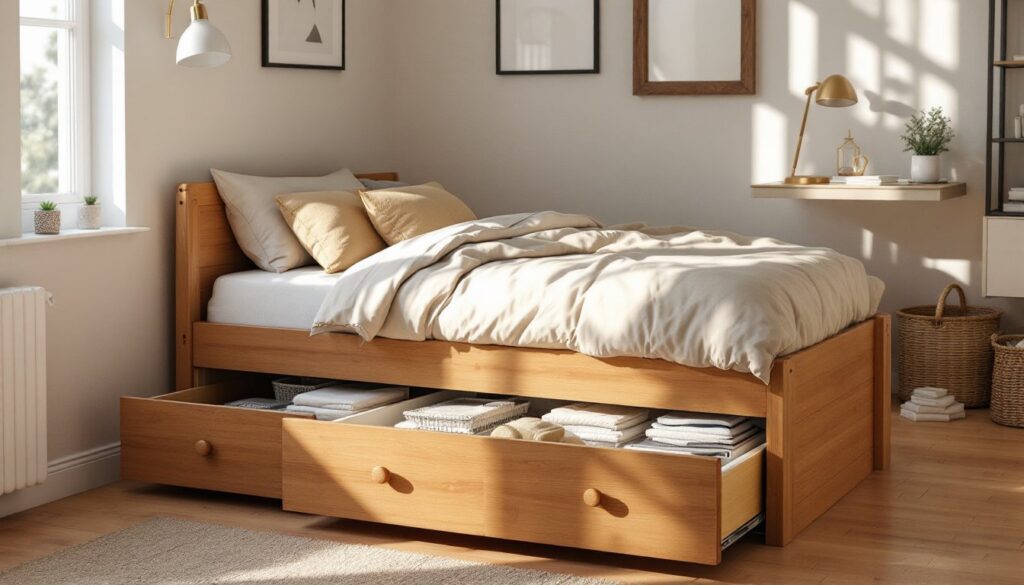
The most straightforward storage bed design uses full-width or partial-width drawers that slide out from the footboard or sides. These typically come in pairs or quads (four smaller drawers instead of two large ones). Quad drawers are often easier for kids to manage, each drawer is lighter and easier to open fully without jamming or tipping.
When shopping, check the drawer slide quality. Metal full-extension ball-bearing slides (the kind that let drawers open fully without tipping) are standard on mid-range and higher beds. Budget models sometimes use cheap plastic or partial-extension slides, which get sticky fast. A full size storage bed frame handles daily use better when slides are rated for the weight you’re storing.
Some beds include a combination: drawers on one side and an open shelf or cubby on the other. This hybrid approach gives flexibility, large items (hockey equipment, art portfolios) go on the shelf, folded clothes and linens in drawers.
Pull-out trundle beds operate similarly but prioritize sleeping space. A rolling platform with its own mattress slides out on casters. This works well in shared rooms or when friends sleep over, though it trades storage volume for occasional guest sleeping.
Loft and Elevated Bed Designs
Loft beds raise the sleeping platform 4–6 feet high, leaving the entire space underneath open for a desk, dresser, lounge area, or shelving units. A girl might have her bed on top and a assignments station below, perfect for a teen balancing schoolwork and sleep.
Lofts demand more ceiling clearance (typically 8.5+ feet is safe: check your ceiling height before buying). They also require a sturdy frame, loft beds handle more dynamic load than a low platform bed, so construction quality matters. Look for kiln-dried lumber or engineered wood rated for the weight, not flimsy 2×4s.
Safety is non-negotiable with lofts. A guardrail (typically 5 inches high) should run along the sides of the sleeping platform to prevent falls. Most codes and manufacturers require this. Ladder or stair access should be sturdy, no rickety rope ladders or sketchy angles. If your daughter is under 6 years old or has balance issues, a loft isn’t appropriate.
Lofts work brilliantly in tiny rooms or when a child needs a dedicated work zone. The downside: they’re harder to set up and require more assembly. Some are wall-mounted, which means drilling into studs, a job that goes smoother with a stud finder and a second pair of hands.
Choosing the Right Size and Layout for Your Space
Bed size matters. A twin bed (approximately 39″ wide × 75″ long) fits snugly in small rooms and is affordable. A full bed (54″ × 75″) offers more comfort for a growing teen and accommodates two kids in a pinch, but takes up more floor space. Measure your room wall-to-wall before ordering, account for nightstands, doors, and windows.
For storage bed depth, factor in how far drawers extend when fully open. If drawers open toward the room, ensure at least 24–30 inches of clearance at the foot of the bed. A bed backed against a wall works best: drawers opening into the room only work if there’s clear floor space.
Ceiling height affects everything. A loft bed needs 8.5+ feet of clearance above the floor to the ceiling: measure from floor to your lowest ceiling point (not the average, the lowest point). Sloped ceilings or attic rooms can kill a loft plan. A standard under-bed drawer design works in any room with 3+ feet of ceiling clearance.
Layout also involves traffic flow. A bed shouldn’t block the only path to the closet or bathroom. Sketch your room on graph paper, map furniture placement, and test the layout before buying. You can use digital room planners too, but pencil-and-paper often catches things a phone app misses.
Consider future needs. Will she outgrow the style in three years? A classic wood or metal frame in neutral tones ages better than a trendy color. Drawers and components should be replaceable, some modular systems let you swap out drawers or add shelving later. Space-saving tiny home storage solutions apply the same logic: design for flexibility and longevity, not just today.
Material and Durability Considerations
Wood is the standard for storage beds. Solid wood (pine, oak, birch) is strong and looks good but costs more. Engineered wood (plywood or hardboard) is lighter, cheaper, and surprisingly durable if the core is solid plywood rather than particle board. Check product specs, a plywood frame with hardwood veneer holds up far better than particle-board construction covered in laminate.
Metal frames (steel) are durable and often sleeker-looking. Steel doesn’t warp from humidity and won’t attract dust mites the way upholstered headboards do. The trade-off: metal can be noisy (squeaks) if joints aren’t tight, and it doesn’t offer the warmth of wood.
Drawer construction is critical. The base, sides, and back should be solid wood or plywood, not flimsy particle board that sags under weight. Look for reinforced corners (mortise and tenon joinery, dowels, or metal brackets). Cheap drawers fail quickly because the corners separate. Drawer bottoms should be plywood or hardboard, not plastic.
Slides determine daily usability. Full-extension ball-bearing slides allow the drawer to open 100% so you can reach the back. They’re quieter, smoother, and last longer. Partial-extension slides or friction slides are cheaper but jam and wear out faster. The best slides are rated for the weight, a quad of drawers under a full mattress might hold 100+ pounds of stuff, so slides should handle that load.
Finish matters too. Solid stains and polyurethane hold up to use and cleaning better than cheap paint or laminate overlays. If the bed comes unfinished, IKEA Hackers and DIY communities show countless ways to finish or upcycle budget frames with stain, paint, and hardware upgrades. A modest wood bed can look custom with the right stain color and new knobs.
Styling and Decorating Your Storage Bed
A storage bed is a foundation, not a finished room. Styling comes down to your daughter’s taste and the room’s existing palette. A neutral wood frame pairs with any bedding, wall color, or accessories. A painted metal frame can be modern, industrial, or cottage-inspired depending on the color.
Bedding is the quickest way to set tone. A patterned duvet, layered throw pillows, and a quality mattress protector transform the bed from utilitarian to inviting. Storage beds often sit lower than standard frames, so layered bedding reads better than a flat quilt.
Accessories around the bed add personality without clashing with the storage functionality. Wall-mounted shelves above the bed eliminate bedside-table clutter. A reading light clipped to a headboard or wall keeps surfaces clear. A fabric bin atop one set of drawers conceals items while adding a pop of color. Designers like those at Young House Love often show how simple accessories and thoughtful styling elevate a budget piece into a room highlight.
If your daughter is handy, drawer pulls and knobs are an easy swap. Swapping out cheap plastic knobs for wood, metal, or vintage hardware instantly upgrades the look. Hardware stores stock hundreds of styles for $5–15 per knob, a small investment with big visual impact. Same applies to a headboard: some storage beds accept aftermarket headboards, or you can mount a fabric panel or wood slat wall behind the bed for depth.
For paint or stain touch-ups, keep the original stain or paint color on hand. Small dings and scratches happen: a small can of stain or paint lets you fix them without replacing the whole bed. Label it and tuck it in a closet, future-you will be grateful when a corner takes a hit.