Table of Contents
ToggleWhen a child outgrows their toddler bed but the bedroom isn’t growing with them, a kids loft bed with storage becomes the practical answer. These elevated sleeping platforms reclaim precious floor space by converting the area below into functional storage, study zones, or play areas. Whether you’re furnishing a small apartment, a shared bedroom, or simply maximizing a compact kids’ room, loft beds with storage offer flexibility that traditional furniture can’t match. They’ve evolved far beyond the basic college-dorm design, modern loft beds now feature integrated drawers, shelving systems, and modular components that adapt as children grow.
Key Takeaways
- A kids loft bed with storage can reclaim up to 40 square feet of floor space by elevating the sleeping platform and converting the area below into functional storage, study zones, or play areas.
- Quality loft beds with storage feature full-extension drawers with ball-bearing tracks, adjustable shelving with weight ratings of 25–50 pounds per shelf, and solid wood or steel frames that prioritize safety for growing children.
- Modern loft bed designs accommodate different room sizes—twin-size lofts for compact rooms under 100 square feet, full-size lofts for medium rooms, and multi-unit systems for larger bedrooms with siblings.
- Kids loft bed with storage options range from budget-friendly kits ($300–$800) suitable for younger children to custom hardwood builds ($2,000+), with mid-range solid wood models ($800–$2,000) offering the best balance of durability and value.
- Built-in desk-and-shelf combos, integrated storage benches, and tall dressers positioned under the loft eliminate the need for separate furniture pieces while teaching children organizational habits early.
- When selecting a loft bed, prioritize solid construction with proper safety ratings and weight limits over trendy styling, and measure your room carefully to ensure the frame, clearance, and storage components fit your child’s needs.
Why Loft Beds With Storage Are Perfect for Modern Kids’ Rooms
A standard bed takes up about 40 square feet of floor space. Raise that bed 4 to 5 feet off the ground, and you’ve suddenly created room for a desk, a dresser, shelving, or a cozy reading nook without expanding the footprint of the bedroom itself. This is the core appeal of loft beds with storage.
For parents managing multiple children in shared bedrooms, loft beds with storage offer separation and independence. One child sleeps elevated while the sibling uses the space below for a desk or play area. Many loft designs accommodate two sleeping surfaces, one elevated, one on the ground, which is a game-changer for siblings who need their own space but share a room.
From a practical standpoint, loft beds with integrated storage reduce the need for separate furniture pieces. Built-in drawers, cubbies, and shelving eliminate clutter and teach kids organizational habits early. You’re not moving a dresser and a bookcase into an already tight space: the storage is part of the bed structure itself. This also means fewer hard corners to bump into and a cleaner sightline in the room.
Safety and durability matter. Quality loft beds use solid wood or steel frames rated for the weight of a growing child plus dynamic movement (jumping, climbing, flopping around at bedtime). Guardrails, proper spacing, and secure fasteners are non-negotiable. A flimsy frame won’t inspire confidence when your 12-year-old is bouncing in their sleep.
Key Storage Features to Look For
Built-In Drawers and Shelving Options
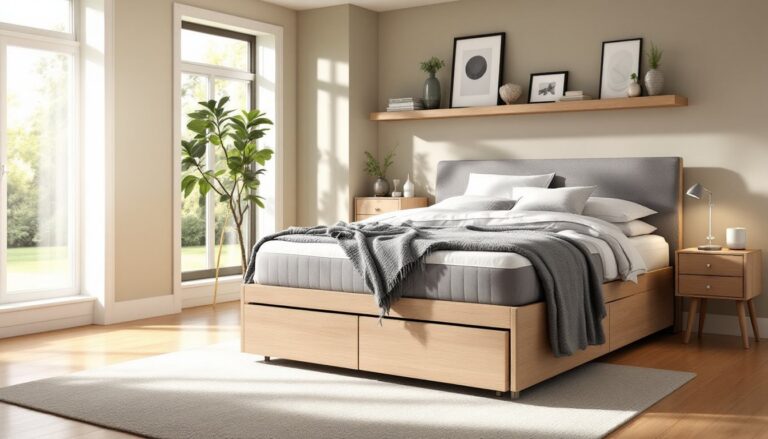
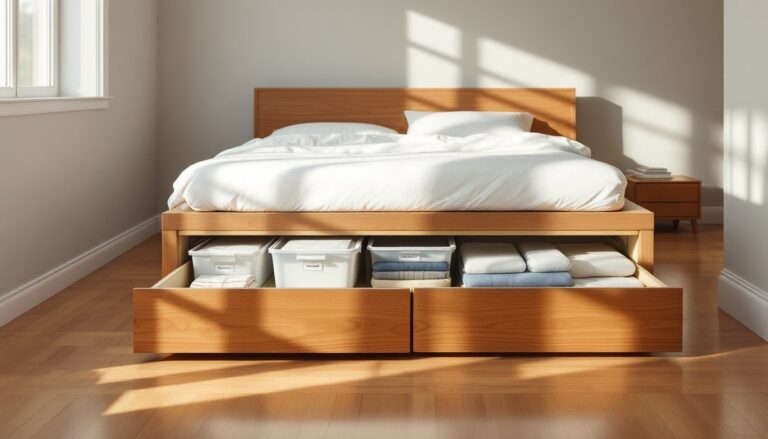
Drawers are the MVPs of loft bed storage. Opt for full-extension drawers that glide smoothly on ball-bearing tracks, flimsy slides fail fast. Look for drawers that open from the side (perpendicular to the bed) rather than pulling out from the foot, which interferes with getting in and out of bed. Typical loft beds offer 2 to 4 drawers with individual depths of 18 to 24 inches, giving you roughly 3 to 5 cubic feet of storage per drawer. That’s enough for seasonal clothing, bedding, or toys.
Shelving should be adjustable. Fixed shelves are a mistake, kids’ needs change, and rigid spacing limits what you can store. Look for loft designs with clip-in shelf pegs or slotted standards so you can raise or lower shelves as your child’s collection grows. Open shelving is easy to access but shows clutter: consider a mix of open and closed storage (shelves with bins or doors) to balance visibility with tidiness.
Weight ratings are critical. A sturdy shelf should hold at least 25 to 50 pounds per shelf. Check manufacturer specs: don’t assume. Particleboard shelves with thin supports are common in budget lofts and fail under real-world loading, books, toys, and décor add weight quickly.
Under-Bed Utilization Styles
The space directly under the bed (usually 4 to 5 feet high) can be configured in several ways. Open-plan designs leave the area empty, perfect for a tall dresser, a desk, or a bookshelf that you’ll add separately. This is flexible but requires you to think through what goes there.
Integrated storage benches built into the foot of the loft take advantage of dead space. A storage bench at the bed’s end provides seating, hidden compartments, and a visual anchor without taking up additional floor space. They’re especially popular in smaller rooms.
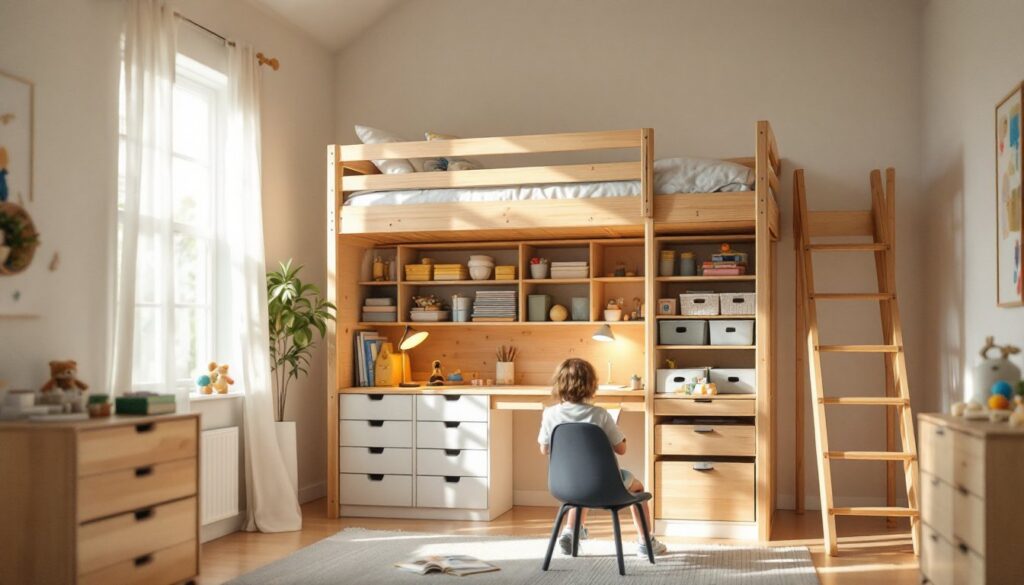
Desk-and-shelf combos are ideal if assignments is a priority. Many modern loft beds feature a built-in desk on one side, shelving above, and a pull-out drawer for supplies. This turns the underbead into a dedicated study zone, keeping the rest of the room open for play or lounging.
Tall dressers or wardrobes fit neatly under many loft designs, especially ones with 5-foot clearance. A 5-drawer dresser (roughly 52 inches tall) slides underneath without feeling cramped, and you’re not stealing floor space from the rest of the room.
Popular Loft Bed Designs for Different Room Sizes
Compact rooms (under 100 square feet) call for minimal, vertical solutions. Twin-size loft beds (39 inches wide, 75 inches long) are the standard here. They pair well with slim desks (36 to 48 inches wide) placed directly under the loft. Shallow shelving, 8 to 10 inches deep, fits snugly alongside without obstructing movement. A space-saving tiny home storage approach works equally well for a child’s bedroom: maximize vertical space, use every wall, and keep the floor clear. This principle applies whether you’re in a studio apartment or a kids’ room that doubles as a craft space.
Medium rooms (100 to 150 square feet) offer flexibility. Full twin or full-size loft beds (54 inches wide) give kids a comfortable sleeping surface and still leave room for additional furniture. Lofts with L-shaped storage (drawers on one side, shelves on another) work well here. You can fit a small play area, a chair, and still walk comfortably around the room.
Larger rooms can accommodate full-size loft beds with deeper under-bed furniture, multi-unit storage systems, or even two adjacent loft beds for siblings. Some designs include a second sleeping loft or sleeping loft with a futon below. The flexibility is tremendous, but don’t over-furnish, empty floor space is as valuable as filled storage.
When building or sourcing a loft, standard lumber dimensions matter. Structural posts are typically 4×4 nominal (actual 3.5 x 3.5 inches), and cross-beams are 2×8 or 2×10 (actual 1.5 x 7.25 or 1.5 x 9.25 inches). If you’re shopping for plans online, many DIYers start with designs from resources like how-to-build loft bed plans, which offer customizable options scaled to different room dimensions. The IKEA Hackers community regularly shares modified loft configurations using stock components, letting you adapt catalog furniture to your room’s unique constraints.
Budget-Friendly vs. Premium Loft Bed Options
Budget options ($300–$800) typically come from big-box retailers or IKEA-style assembly kits. Materials are often wood-veneered particleboard or softwood (pine), and storage is basic, maybe one or two drawers and simple shelving. Assembly takes 4 to 8 hours with basic tools. These beds work fine for younger kids (ages 5–10) with lighter loading, and they’re genuinely good for testing whether a loft bed suits your child’s personality and room layout before investing more.
The trade-off: Particleboard shelves sag under books. Drawer slides can jam. The ladder feels flimsy. And if you ever need to move, these beds are fragile in transit.
Mid-range options ($800–$2,000) use solid wood or premium plywood and better hardware. Drawers have full-extension slides, adjustable shelving uses proper standards, and the frame feels sturdy. You’ll see options from dedicated furniture makers or full-custom builds from local carpenters. Assembly is still DIY-friendly, or you can hire help. These last through multiple children and handle real-world wear.
Premium options ($2,000+) are typically custom-built by carpenters or designers, featuring solid hardwood, heirloom-quality construction, and storage that adapts over time. These often include features like built-in desks with cable management, dedicated closet systems, and even hidden compartments. They’re an investment, but they become keepsakes.
When comparing costs, factor in delivery, assembly labor, and warranty. A $500 loft that arrives damaged and takes 12 hours to assemble might actually cost more than a $1,200 option with white-glove delivery and a 5-year guarantee. The Handyman’s Daughter offers tutorials on assessing quality before purchase, examining joint construction, hardware grade, and finish durability helps you spot good value from cheap shortcuts.
For families building their own, solid wood 2×6 and 4×4 lumber costs roughly $2–$4 per board foot (pricing varies by region and market). A frame for a twin loft uses about 80–120 board feet before accounting for shelving, so material cost ranges from $200–$500. Add bolts, brackets, and finish, and a homemade loft lands in the budget-to-mid-range territory with heirloom durability.
Conclusion
A well-chosen loft bed with storage transforms a cramped kids’ room into a functional space that grows with your child. Prioritize solid construction and thoughtful storage design, drawers with quality slides, adjustable shelving, and realistic weight limits, over trendy styling. Whether you’re buying ready-made, assembling a kit, or building custom, measure your room twice, check safety ratings, and don’t skip the installation steps. The result is a bedroom that works harder and smarter, freeing up square footage and teaching kids organization in one furniture piece.