Table of Contents
ToggleBathrooms are notoriously tight on space, and that gap above the toilet often goes to waste. Whether you’re storing towels, toiletries, or cleaning supplies, the area above the toilet is premium real estate that most homeowners overlook. Over-the-toilet storage solutions range from simple wire racks to custom floating shelves, each offering a practical way to declutter while adding functionality to a bathroom that likely feels cramped. The key is choosing an option that fits your space, your budget, and your design preferences. Read on to discover seven straightforward approaches to transform that wasted vertical space into organized storage.
Key Takeaways
- Unique over the toilet storage ideas range from floating shelves to freestanding units, with options for both renters and homeowners to reclaim vertical bathroom space.
- Floating shelves and wall-mounted cabinets require secure installation into wall studs spaced 16 inches apart and should be mounted at least 12 inches above the toilet tank to prevent head bumping.
- Freestanding over-the-toilet shelving units offer zero-installation alternatives with stainless steel frames and tempered glass shelves that resist bathroom humidity while supporting 75–150 pounds.
- Corner storage racks maximize forgotten corner space in small bathrooms, while ladder shelves provide a fully reversible option that requires no drilling or permanent wall damage.
- DIY custom shelving using plywood and heavy-duty brackets gives you complete control over dimensions and style, with proper stud location and polyurethane sealing essential for durability.
- Styling your storage with matching containers, balanced visual weight, and neutral colors transforms functional shelves into a curated bathroom look that serves both form and function.
Floating Shelves And Wall-Mounted Cabinets
Maximizing Vertical Space Above The Toilet
Floating shelves are a clean, modern choice for over-the-toilet storage. They attach directly to the wall studs using heavy-duty brackets hidden beneath the shelf, creating a streamlined look with no visible support legs. When installing floating shelves above a toilet, measure the wall stud location carefully, most bathroom walls have a stud every 16 inches on center, and use lag bolts or heavy-duty wall anchors rated for at least 25 pounds per shelf.
Before drilling, shut off water to the toilet and confirm there are no supply lines or drain pipes running through the wall behind your installation site. Floating shelves work best in bathrooms with 18 to 24 inches of horizontal space: anything narrower and shelves feel cramped. Mount them at least 12 inches above the tank lid to avoid bumping your head, and space each shelf 10 to 12 inches apart vertically for easy access.
Wall-mounted cabinets offer an alternative if you want enclosed storage with a finished look. These cabinets mount directly to wall studs and come in solid wood, laminate, or plywood-core options. Hardwood plywood holds screws better in damp bathroom environments than particleboard. Look for cabinets with adjustable shelves so you can customize spacing for your specific items, towels need more height, while smaller bottles fit tighter shelving.
Over-The-Toilet Shelving Units With Elegant Finishes
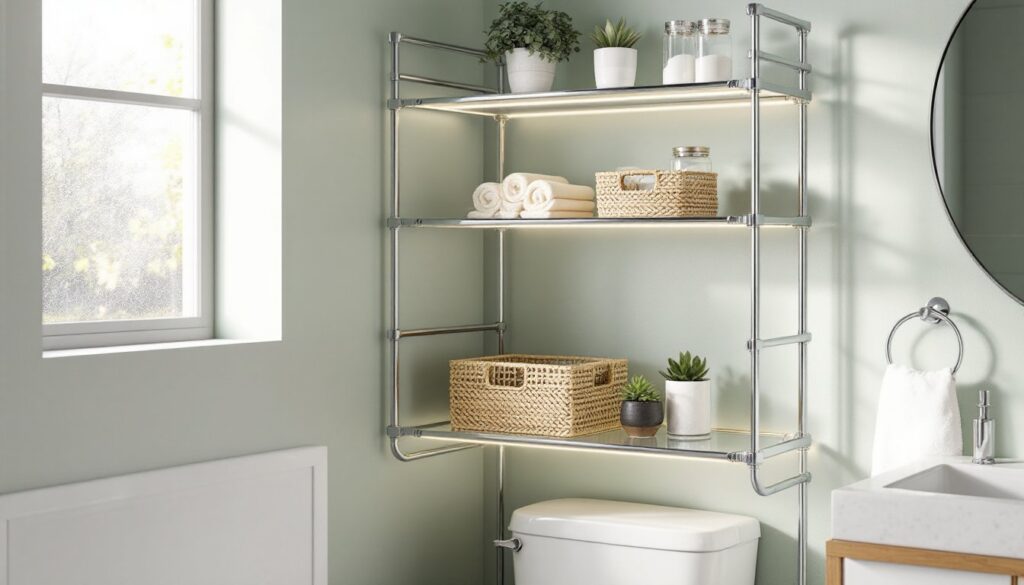
Pre-made over-the-toilet shelving units sit on the toilet tank and span the wall above, offering instant storage without installation. These freestanding units typically come in metal frames with wood or glass shelves and range from two to four tiers. They’re popular because they require zero drilling, take 15 minutes to assemble, and work in rental bathrooms where permanent mounting isn’t allowed.
Material choice matters for bathroom durability. Stainless steel frames resist rust better than painted steel in humid environments, though stainless costs more upfront. Solid wood shelves (oak, walnut, or bamboo) add warmth but need occasional sealing to prevent warping from moisture. Tempered glass shelves look sleek and maximize visual lightness, important in small bathrooms, and they’re easier to clean than wood.
These units typically support 75 to 150 pounds depending on frame thickness and shelf count, so don’t overload with heavy items. The wider your toilet tank, the more stable the unit will be: narrow tanks may require a wall-mounted stabilizer bracket. Smart storage solutions that combine function with design can transform how your bathroom feels, and a well-chosen shelving unit does exactly that.
Corner Storage Racks And Compact Organizers
Corner space above the toilet is often forgotten, yet it’s ideal for corner shelving racks. These triangular or L-shaped units fit snugly in the corner where two walls meet, adding a surprising amount of storage without eating into the narrow wall space beside the toilet. Corner racks typically have two or three shelves and support 30 to 60 pounds, making them perfect for light items like rolled towels, air fresheners, and decorative containers.
Wire corner racks are budget-friendly ($20–$50) and Mount to both walls with simple brackets and screws. They’re also easy to remove without wall damage, unlike shelves that require patching after removal. If your bathroom has limited width, a corner unit leaves the main wall clear for a mirror or other fixtures.
Compact over-the-toilet organizers with small shelves, hooks, and cubbies work well in tight quarters. Look for units between 20 and 28 inches wide that leave enough clearance on either side of the toilet bowl. These often include towel bars or hooks as a bonus, combining storage with hanging space in one footprint.
Ladder Shelves And Tiered Storage For Small Bathrooms
Ladder shelves lean against the wall above the toilet, offering a space-saving alternative to wall-mounted options. The A-frame design is stable and doesn’t require drilling or studs. Most ladder shelves are 60 to 72 inches tall and come with four to five tiers, providing compact vertical storage in a footprint as narrow as 20 inches. They work especially well in bathrooms where the toilet sits in a corner or alcove.
Wood ladder shelves feel warmer and more decorative than metal, while metal versions are easier to wipe down in humid bathrooms. When placing a ladder shelf, position it 2 to 3 inches away from the wall so it doesn’t block access to the wall behind it if plumbing ever needs repair. Secure the shelf to a wall stud with a diagonal brace if your bathroom is prone to vibrations from pipes or if you have young children who might try to climb it.
Weight distribution matters with ladder shelves, place heavier items on lower tiers and lighter ones higher up to maintain balance. A 3-foot ladder shelf typically supports 75 pounds total, but don’t concentrate all the weight on one shelf. Many DIYers use ladder shelves as a stepping stone before committing to permanent wall-mounted storage, since they’re fully reversible.
DIY Over-The-Toilet Storage Projects
If you’re handy with basic tools, building custom over-the-toilet shelving gives you full control over dimensions, style, and finish. A simple two-shelf unit requires only 3/4-inch plywood, 2×2 studs, wood screws, wall brackets, and basic carpentry tools, miter saw, drill, level, and stud finder.
Basic project steps:
- Locate studs with a stud finder and mark two mounting points 16 inches apart horizontally, at least 12 inches above the tank.
- Attach heavy-duty L-brackets to the wall using 3-inch wood screws driven into studs (not just drywall).
- Cut your plywood shelves to length, measure twice, cut once, and sand edges smooth to prevent splinters.
- Attach shelves to brackets using pocket hole joinery or screws from underneath for a clean look.
- Seal the wood with polyurethane or bathroom-grade varnish to resist humidity and splashing.
- Use a level as you secure the shelves: even a 1/4-inch slope will be obvious and can cause items to slide.
For a rustic aesthetic, use reclaimed wood or stain new plywood to match your bathroom trim. If you’re not confident cutting straight lines, ask a home center to make cuts free or for a small fee. Many DIY home gym storage ideas use similar framing techniques, so the skills transfer across projects. Always wear safety glasses when cutting and drilling, and work gloves when handling rough-sawn lumber.
Styling Your Storage For Function And Aesthetics
Once your storage is installed, styling it makes the difference between cluttered shelves and a curated bathroom look. Group like items in matching containers, glass jars for cotton balls, woven baskets for extra toilet paper rolls, or clear acrylic organizers for medications. Label containers so household members know where things belong, which cuts down on restocking chaos.
Keep the visual weight balanced: alternate dark and light containers on shelves, and don’t crowd everything to one side. Leave breathing room, a shelf that’s 60 percent full looks intentional, while a packed shelf feels chaotic. Small plants, a candle, or a decorative box can soften a purely functional setup without sacrificing usability.
Color matters too. Neutral containers (cream, gray, white) recede visually and make bathrooms feel larger, while bold colors can feel playful but risky if you redecorate often. If you’re unsure about your style direction, look to design inspiration from remodelista for high-end bathroom storage ideas you can adapt affordably. Eventually, your storage should serve your life, if it looks good but doesn’t work for how you actually use the space, it’ll frustrate you daily.
Final Thoughts On Choosing The Right Solution
Your best over-the-toilet storage choice depends on three things: how much space you have, how permanent you want the installation, and your budget. Renters should stick with freestanding units or corner racks that come off cleanly. Homeowners with solid walls and basic tool comfort can tackle floating shelves or DIY projects for a custom fit. If you’re tight on floor space overall, a tiered ladder shelf or corner unit maximizes vertical storage without eating into your bathroom layout.
Start by measuring your wall space, sketching the layout, and testing your chosen unit in place before making the final purchase. Small bathrooms don’t forgive wasted space, so getting it right the first time saves money and frustration. Whatever you choose, ensure it’s secured properly, a falling shelf or toppling unit is a safety hazard and a bathroom disaster.