Table of Contents
ToggleSmall bathrooms often feel like a spatial puzzle where every inch matters. Whether you’re dealing with a modest apartment bathroom or a guest half-bath, finding the right storage solution can transform clutter into calm. A well-chosen small bathroom storage cabinet doesn’t just tuck away toiletries and linens, it can actually make your space feel larger by eliminating visual chaos. This guide walks you through the types of cabinets that work best in tight quarters, how to pick the right fit for your layout, and what you need to know to install one yourself.
Key Takeaways
- A small bathroom storage cabinet eliminates visual clutter and makes rooms feel larger by consolidating items behind closed doors rather than scattering them across countertops.
- Wall-mounted and over-toilet cabinets maximize vertical space at zero cost to floor area, making them ideal for compact bathrooms where every inch counts.
- Proper installation requires locating wall studs with a stud finder and securing cabinets with lag bolts or 3-inch wood screws, never relying on drywall anchors alone for heavy cabinets.
- Choose cabinet materials based on moisture resistance: solid wood needs sealing, while MDF with melamine or veneer finishes resist bathroom humidity better and cost less.
- A small bathroom storage cabinet project costs $100–$400, takes a weekend to install, and delivers immediate organization without renovation expenses or permanent commitment.
Why Small Bathrooms Need Smart Storage Cabinets
Small bathrooms are prime real estate for clutter. Without dedicated storage, countertops become dumping grounds for bottles, jars, and half-empty products. A small bathroom storage cabinet solves this by consolidating items vertically and behind closed doors, instantly making the room feel more spacious and organized.
When storage is visible and scattered, it creates visual noise. A single, well-placed cabinet pulls everything into one tidy location, which actually makes the room appear larger, a design principle known as “visual calm.” Plus, a closed cabinet protects toiletries from moisture damage and extends product life. In a humid bathroom environment, organized storage means fewer ruined bottles and less wasted money.
If you’re renting or hesitant about permanent installation, a small storage cabinet for bathroom use offers flexibility without the commitment of built-in shelving or full remodeling. You get instant organization without renovation costs or landlord approval headaches.
Types Of Bathroom Storage Cabinets For Compact Spaces
Not all bathroom storage cabinets are created equal. Understanding the main types helps you choose what actually fits your space and needs.
Vanity Cabinets With Built-In Storage
Vanity cabinets serve double duty: they hold your sink and provide storage underneath. In a small bathroom, a vanity cabinet with drawers and shelves maximizes usable space without eating up floor area. Standard bathroom vanities range from 24 to 36 inches wide: smaller bathrooms usually accommodate a 24-inch vanity comfortably.
The advantage here is efficiency. You’re not adding a second piece of furniture, the vanity itself becomes your primary storage. Look for vanities with pull-out drawers rather than just open shelving, since drawers hide contents and keep items from sliding to the back where they’re forgotten.
If you’re replacing an existing vanity, measure the wall space, check plumbing rough-in locations, and confirm that the new cabinet will clear your bathroom door when opened. Installing a new vanity typically requires disconnecting supply lines, drain, and possibly running fresh plumbing, consider calling a plumber for this work, especially if you’re adjusting fixture locations.
Wall-Mounted And Over-Toilet Cabinets
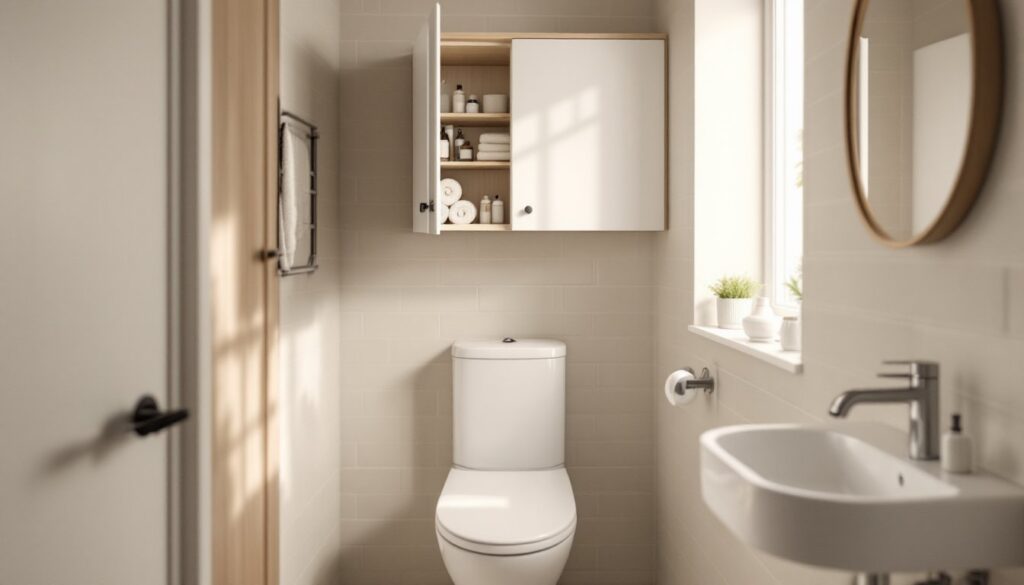
When floor space is at a premium, go vertical. Wall-mounted bathroom storage cabinets and over-toilet units claim zero floor real estate while adding substantial capacity. Over-toilet cabinets typically span 24 to 27 inches wide and fit snugly above the toilet tank, utilizing otherwise wasted space.
Wall-mounted cabinets can hang anywhere: above a vanity, beside a mirror, or on any studs. A white bathroom storage cabinet or light-colored option keeps the space feeling airy and open. Before mounting any cabinet, locate the wall studs using a stud finder and secure mounting brackets with lag bolts into the studs, drywall anchors alone won’t hold heavy, loaded cabinets safely.
The trade-off is access. You’ll need a step stool or ladder to reach upper shelves comfortably. Make sure frequently used items stay at waist or eye level, and reserve higher shelves for seasonal items or backup supplies.
How To Choose The Right Cabinet For Your Layout
Choosing the right cabinet starts with honest assessment of your space and daily needs. Measure twice, buy once, literally. Grab a tape measure and check the width, height, and depth of your intended installation area. Account for door swing and clearance: a cabinet that blocks the bathroom door or hits your knee when you open a drawer is storage you’ll avoid using.
Consider what you’re actually storing. Medications, cosmetics, and daily-use toiletries need accessible, eye-level space. Cleaning supplies, backup linens, and seasonal items can live higher or deeper. A small storage cabinet for bathroom use works best when it aligns with your household’s rhythms, store what you use most frequently where you can reach it easily.
Different materials suit different situations. Solid wood (oak, maple, or pine) offers durability and warmth but requires finishing or sealing for bathroom moisture protection. Medium-density fiberboard (MDF) with a veneer or melamine finish resists moisture better and costs less, but it’s lighter and less repairable if damaged. For a white bathroom storage cabinet or any painted finish, melamine or primed MDF works well and resists staining. According to home organization strategies, maximizing vertical space and using pull-out organizers dramatically improves usability in small bathrooms.
Budget matters too. Ready-made cabinets from big-box stores run $150 to $400 for quality pieces, while custom or semi-custom options climb to $600 and up. DIY-built cabinets from free woodworking plans and tutorials can cost $100 to $250 in materials if you have basic tools and some building experience. Factor in your time, confidence level, and whether you have a workspace for construction.
Installation Tips For DIY Bathroom Cabinet Projects
Installing a small bathroom storage cabinet yourself saves labor costs but demands precision. Here’s how to do it right.
Before You Start:
- Locate wall studs with a stud finder and mark them with pencil. Studs are typically 16 inches on center.
- Check for existing plumbing, electrical lines, or vents in the wall using a multi-scanner if available.
- Ensure your cabinet’s weight capacity matches what you’ll store (a typical cabinet holds 50 to 150 pounds depending on design and installation).
Installation Steps:
-
Mark mounting points. Hold the cabinet against the wall at your intended height. Use a level to ensure it’s perfectly plumb (vertical). Mark the screw holes with a pencil.
-
Drill pilot holes. Drill small pilot holes at the marks, these prevent wood splitting and ensure screws go in straight.
-
Secure to studs. Use 3-inch wood screws or lag bolts (3/8-inch bolts with washers) driven into studs. Never rely on drywall anchors alone for heavy cabinets. Studs are your foundation.
-
Install shelves and hardware. Once the cabinet is mounted, install any adjustable shelves and hanging rods per the manufacturer’s instructions.
-
Caulk gaps. Seal any gaps between the cabinet and wall with paintable caulk to prevent moisture infiltration. Moisture is a bathroom cabinet’s enemy.
Safety & Tools:
Wear safety glasses when drilling, and use a cordless drill-driver for pilot holes and a regular drill for larger holes. If the wall is tile or marble, use a masonry bit and go slow to avoid cracking. For precise angle cuts or complex carpentry, a miter saw beats a handsaw, but a circular saw works in a pinch. According to home organization experts, proper installation and thoughtful product placement make storage both beautiful and functional. According to space-saving storage ideas, vertical storage solutions are essential in small bathrooms and other compact areas.
Conclusion
A small bathroom storage cabinet is one of the highest-return DIY projects you can tackle. It costs between $100 and $400, takes a Saturday afternoon, and instantly transforms a chaotic space into an organized, spacious-feeling room. Whether you choose a vanity cabinet, wall-mounted unit, or over-toilet design, the key is matching the solution to your actual space and storage needs. Measure carefully, mount securely to studs, and seal against moisture. You’ll use and appreciate that cabinet every single day.