Table of Contents
ToggleA cluttered laundry room drains energy before you even start a load. Piles of detergent, fabric softener, cleaning supplies, and folded clothes scattered across the counter or floor create unnecessary stress. Strategic laundry room storage shelves transform that chaos into a functional, organized workspace where everything has its place. Whether you’re dealing with a cramped closet-sized room or a sprawling basement utility space, the right shelving solution lets you reclaim your laundry room, and your sanity. This guide walks you through selecting, installing, and organizing shelves that work for your specific space and lifestyle.
Key Takeaways
- Strategic laundry room storage shelves transform cluttered workspaces into organized, functional areas by freeing up counter and floor space while keeping supplies visible and accessible.
- Wall-mounted shelves are ideal for small laundry rooms since they save floor space, but installation requires anchoring into wall studs spaced 16 inches apart for proper weight capacity.
- Freestanding shelving units offer zero-installation flexibility and mobility, though they consume floor space and should be secured to the wall for stability if you have children or pets.
- Choose shelving materials based on humidity levels: metal or wire shelves resist moisture better than wood or particleboard, making them superior for damp laundry environments.
- Proper organization using containers, labels, and categorical grouping on laundry room shelves keeps essentials accessible at eye level while seasonal items store higher, maximizing efficiency.
- Ensure safe installation by locating studs with a stud finder, using a level for horizontal alignment, and never storing heavy items above shoulder height to prevent accidents.
Why Laundry Room Shelving Matters for Home Organization
Your laundry room is one of the hardest-working rooms in your home, yet it often receives the least attention. Between detergents, fabric refreshers, stain removers, spare hangers, lint traps, and seasonal items, clutter accumulates fast. Without dedicated storage, these essentials end up on counters, windowsills, or shoved into cabinets where you can’t find them.
Proper shelving solves this in three ways. First, it frees up valuable counter and floor space, making the room feel larger and less chaotic. Second, it keeps supplies visible and accessible, no more hunting for that one bottle of stain remover buried behind six others. Third, it protects your investment in cleaning products by keeping them organized, visible, and less likely to be damaged or forgotten.
Beyond functionality, shelves create psychological relief. A tidy laundry room makes the chore itself feel faster and more manageable. You’re no longer wrestling with clutter while trying to get through your wash day routine.
Types of Laundry Room Storage Shelves to Consider
Before you grab a drill, understand the main shelf categories available. Each has trade-offs in cost, installation effort, weight capacity, and aesthetics.
Wall-Mounted Shelves
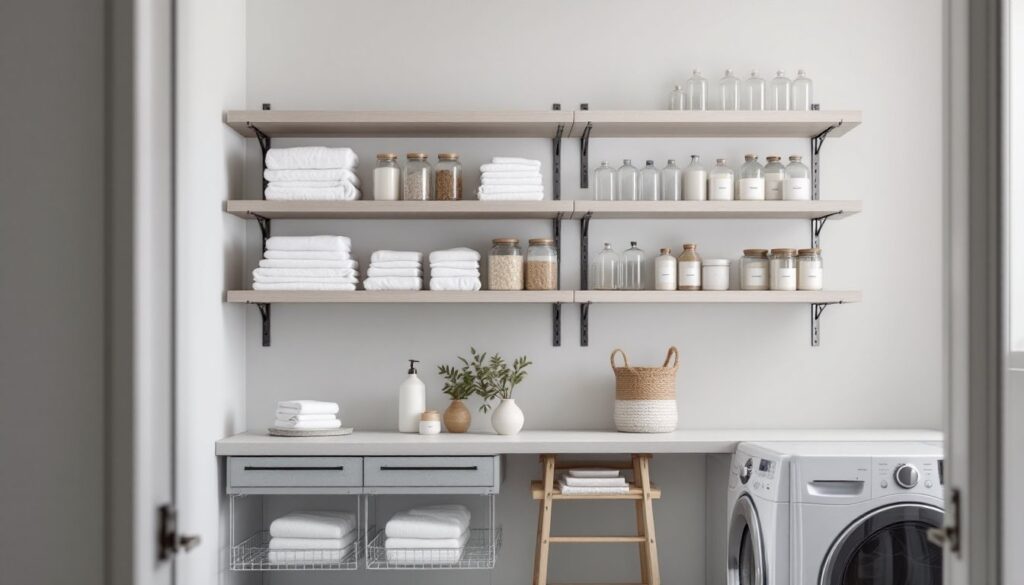
Wall-mounted shelves are the go-to for most laundry rooms because they save floor space and suit small spaces well. They attach directly to wall studs using brackets and can handle moderate to heavy loads depending on bracket quality and stud spacing. Metal L-brackets or floating shelf hardware offer clean, minimal looks. Wood shelves with visible brackets feel warmer and more built-in.
The catch: you need solid walls. Drywall alone won’t support much weight, always anchor into studs spaced 16 inches on center (standard framing). If studs don’t align where you want shelves, you’ll need toggle bolts or heavy-duty drywall anchors, which reduce weight capacity. Wall studs in older homes may sit 12 or 24 inches apart, so verify your wall before planning.
Freestanding Shelving Units
Freestanding units require zero drilling, zero wall damage, and zero stud-hunting. Metal industrial shelving, wood utility shelves, and ready-to-assemble (RTA) units give you flexibility to move or reconfigure later. Wire shelving units offer ventilation, making them ideal if your laundry room tends toward humidity. Solid wood or laminate shelves look more finished but weigh more and may feel out of place in a utility room.
The trade-off: freestanding units eat floor space. In a cramped laundry room, that’s a deal-breaker. They’re also less stable than wall-mounted shelves, so securing them to the wall (even though they’re “freestanding”) is smart, especially if you have kids or pets.
You might also consider wire shelving for its durability and easy-to-clean design, or hybrid solutions like wooden storage cabinets with doors if you want to hide unsightly supplies while maximizing vertical space.
How to Choose the Right Shelves for Your Space
Selecting shelves isn’t just about aesthetics, it’s about matching capacity, space, and your actual needs.
Measure your wall and floor. Jot down the width, height, and depth of the space available. Note any obstacles: light switches, outlets, windows, pipes, or HVAC registers. These dictate where you can mount shelves. Also measure wall height and stud locations with a stud finder before committing to a layout.
Assess your load. What are you actually storing? Lightweight plastic bottles of detergent don’t need industrial-grade shelves. But if you’re stockpiling laundry supplies, seasonal bedding, or storing a washer/dryer on upper shelves (not recommended), you need 200+ pounds per shelf capacity. Metal shelving typically handles 150–300 pounds per shelf depending on span and bracket design: wood shelves with proper support handle similar or more.
Consider humidity and ventilation. Laundry rooms are often damp, especially if your dryer vents indoors or humidity runs high. Metal or wire shelves shed moisture better than wood or particleboard. If moisture is a concern, skip sealed cabinets and choose open shelving. Ensure your dryer vent is properly vented outdoors, a clogged indoor vent drives moisture and heat into the room, degrading any shelf material over time.
Think about accessibility. Shelves 6–8 feet high look impressive but are hard to reach safely. Most people work best with shelves between eye level and waist level for everyday items, with higher shelves for occasional-use supplies. Don’t place heavy items above shoulder height, it’s unsafe and awkward to retrieve.
Factor in your aesthetic. A utilitarian basement laundry room might suit industrial metal shelving fine. A first-floor laundry room visible to guests might warrant hanging storage solutions or wood shelves that match your home’s style. Budget and effort align with your priority here.
Installation Tips and Best Practices
Proper installation makes the difference between shelves that hold for years and ones that sag, crack, or pull away from the wall.
For wall-mounted shelves: Start by locating studs with a stud finder (a battery-powered magnetic or electronic model costs $15–$40). Mark stud centers with a pencil. Measure and mark where your shelf brackets will go, typically 16 inches apart or wider depending on bracket design. Use a level to ensure marks are perfectly horizontal. If possible, hit at least two studs per shelf. A 3-inch wood or concrete screw into a stud (versus a drywall anchor) handles real weight.
Pre-drill holes to prevent splitting wood or drywall. Install brackets securely, double-check level, then place your shelf and tighten any bolts. Don’t skimp on this step, a slipping shelf is a safety hazard.
For freestanding units: Place the unit on a level floor. Check each leg with a level: shim if needed. Assemble according to instructions, don’t skip steps or tighten bolts fully until the entire frame is up: it’s easier to adjust before locking everything down. Once assembled, verify the unit is plumb (perfectly vertical) and secure it to a wall stud with a bracket or strap if the room has pets, kids, or seismic activity risk.
Materials and tools you’ll need:
- Shelves (wood, metal, or composite)
- Brackets or hardware (sized for weight capacity)
- Screws or bolts matching your wall type
- Stud finder
- Drill/driver
- Level (24 inches works for most shelves)
- Tape measure and pencil
- Possibly shims for uneven floors
Safety: Wear safety glasses when drilling overhead. Use dust masks if cutting materials, and gloves when handling raw metal or splinter-prone wood. For wall-mounted shelves above 6 feet, use a stable ladder or step stool, never stand on a chair or unstable surface.
Resources like The Handyman’s Daughter and IKEA Hackers offer step-by-step tutorials and creative solutions if you get stuck.
Organizing and Maximizing Your Laundry Room Shelves
Shelves sit empty until you give them purpose. Strategic organization keeps your system functional and saves time.
Categorize your supplies. Group items by frequency of use. Daily essentials (detergent, fabric softener, stain spray) go on eye-level or upper-chest-height shelves. Seasonal or backup stock goes higher or deeper. Cleaning rags, dryer lint traps, and supplies for iron or delicate cycles occupy middle shelves.
Use containers and labels. Clear plastic bins or baskets corral small items and prevent shelf clutter. Label everything, even if it seems obvious, you’ll thank yourself six months from now. Clear containers let you see when you’re running low on supplies without unloading the shelf.
Maximize vertical space. Stack like items (spare towels, folded linens) in uniform piles. Install a rod on one shelf for hanging finished clothes or drying delicate items. Use shelf risers to double your storage density if weight allows. Over-the-door racks on the laundry room door hold spray bottles or small baskets without taking shelf space.
Leave breathing room. Don’t pack shelves so tightly you can’t see or grab what you need. A 1–2 inch gap between the shelf and your stored items keeps air flowing and prevents dust buildup on top of bottles.
Adapt as seasons change. Winter means more blankets: summer means more lightweight linens. Review your shelf layout quarterly and shift items up or down based on current needs. This keeps your system from becoming a stagnant, dusty pile.