Table of Contents
ToggleA small kitchen island isn’t just a luxury for sprawling kitchens anymore, it’s become the go-to move for homeowners working with tight spaces. Whether you’re dealing with a galley layout, an open floor plan that needs definition, or simply missing counter space, a small kitchen island can deliver serious functionality without eating up your square footage. The best part? You don’t need a magazine-worthy kitchen or a contractor’s budget to make it work. In 2026, kitchen islands have evolved beyond one-size-fits-all designs into smart, modular solutions that fit real homes. Let’s walk through seven actionable approaches to find the small kitchen island that works for your space.
Key Takeaways
- A small kitchen island delivers serious functionality in tight spaces by adding counter space and creating natural zone boundaries without requiring permanent construction.
- Maintain at least 36 inches of clearance on all sides of your island for safe movement, and keep width between 18–24 inches for galley kitchens and 24–30 inches for standard layouts.
- Rolling kitchen islands with locking casters offer maximum flexibility for homes that entertain, have small children, or need seasonal layout changes.
- Incorporate built-in storage through drawers, cabinets, and open shelving to transform your kitchen island into a genuine problem-solver that organizes frequently used items.
- Budget-friendly DIY kitchen island options using stock cabinets, repurposed furniture, or IKEA components cost between $150–$800 and require only basic tools and 4–6 hours of assembly.
- Position narrow islands perpendicular to long walls in galley kitchens to break up the tunnel feeling, and use light-colored materials and open shelving to make spaces feel larger.
Why a Small Kitchen Island Works for Tight Spaces
A small kitchen island solves multiple problems at once. First, it adds genuine counter space, something most compact kitchens desperately need. Unlike a cart that rolls away, a permanent or semi-permanent island anchors your workflow and gives you a dedicated surface for prep, plating, or even casual dining. Second, an island creates a natural boundary between zones without requiring walls or permanent construction. In open-plan homes, this matters. You get visual separation from the living area while keeping the kitchen feeling part of the larger space.
Scale is everything here. A cramped island that forces you to shuffle sideways defeats the purpose. The goal is a narrow kitchen island or mobile kitchen island that leaves at least 36 inches of clearance on all sides, that’s the sweet spot for movement and functionality. Most building codes and design standards recommend a minimum 42-inch clearance for two-way traffic, but 36 inches is workable if that’s all you’ve got. Measure your space before you commit. Width-wise, think 24 to 30 inches for a deep island: anything deeper and you’ll struggle to reach the far side or cross the room comfortably.
Rolling Kitchen Islands: Flexibility Meets Function
A rolling kitchen island cart is your answer if you want zero installation and maximum flexibility. These mobile kitchen island units sit on locking casters (make sure they lock, non-locking wheels are a safety hazard and a frustration) and can be wheeled out of the way when you need floor space or moved to wherever you’re working. A movable kitchen island works especially well in homes where you entertain, have small children, or simply change your kitchen layout seasonally.
When shopping for a kitchen island cart, look for stainless steel or powder-coated frames that handle moisture and spills. The countertop should be durable, butcher block, laminate, or composite materials all work, though laminate is easier to clean. Height matters: standard island height is 36 inches, which aligns with most countertops and allows comfortable seating on bar stools. A movable kitchen island with seating often means two to three stools tucked under a slight overhang on one side. Ensure the casters are rated for the weight you’ll place on top: most commercial-grade casters handle 300+ pounds per wheel. Look for units with a shelf or drawer for knife storage, mixing bowls, or pantry overflow. Many quality options fall between $150 and $500, depending on materials and size.
Narrow Kitchen Islands for Galley-Style Kitchens
Galley kitchens, those long, parallel layouts with counters on two sides, often feel cramped, but a narrow kitchen island can work beautifully if it’s done right. The key is keeping width to 18–24 inches. This depth still gives you functional counter space while leaving room to move between the island and the perimeter counters. You’ll lose some elbow room, but you gain a work surface and visual interest.
For a galley-style space, position your narrow kitchen island perpendicular to the long walls rather than parallel. This breaks up the tunnel feeling and creates a more open flow. Avoid heavy overhangs: keep the island simple and clean-lined. If seating is a must, consider a single-sided overhang on the kitchen-side edge, no stools on both sides, which would block traffic. Many narrow island for kitchen designs incorporate open shelving (instead of solid cabinetry) to lighten the visual load. A 24-inch-deep, 36–48-inch-long island in a galley layout gives you real utility without eating the room alive. Light-colored materials and an open design will make the space feel larger than it actually is.
Multi-Purpose Islands with Built-In Storage
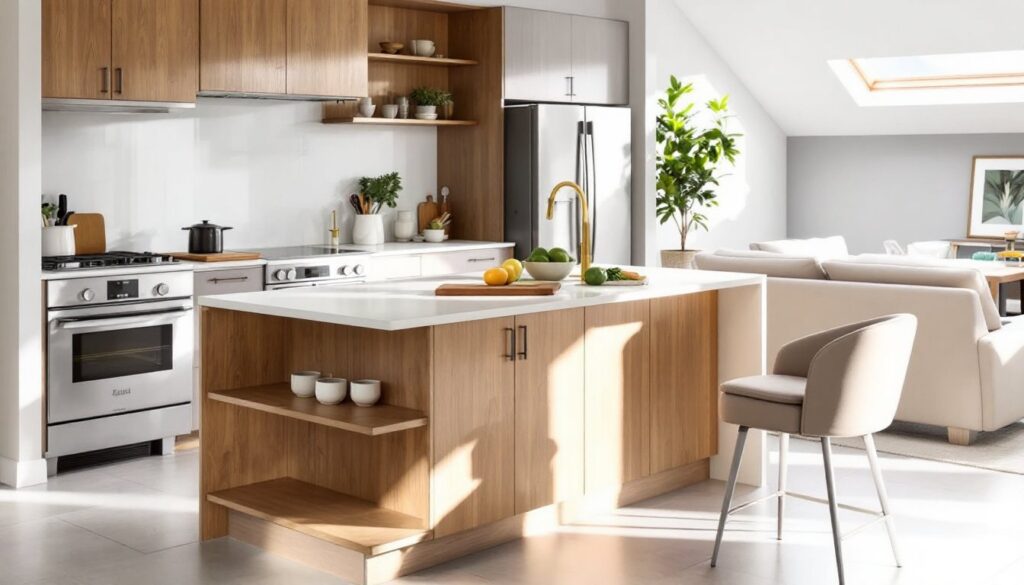
Storage is the hidden win with a well-designed island. A kitchen island with storage transforms it from a pretty counter into a genuine problem-solver. Think vertical: shelves, cabinets, drawers, even pegboard for hanging utensils or pots. A large kitchen island can accommodate deep cabinetry on one side and open shelving on the other, but even a small kitchen island with storage is possible if you plan the footprint.
Drawers are lifesavers for utensils, tea towels, or small appliances. Cabinets below the countertop hide mixing bowls, cutting boards, and bulk pantry items. Open shelving works for cookbooks, baskets, or display. The layout depends on your workflow, what do you grab most often? Keep frequently used items within arm’s reach of prep zones. A kitchen island design with rolling storage underneath (removable bins or baskets on wheels) gives you flexibility to reorganize as needs change.
Maximizing Countertop and Shelf Space
For a modern kitchen island or traditional design, maximize every inch. Overhang the countertop 12–15 inches on the dining side to accommodate bar seating and leg room. Use the overhang to hide mounted shelving or hooks for hanging kitchen towels. Mount a paper towel holder or knife magnet on a narrow side panel if you’ve got 6–8 inches of exposed depth. Install a shallow rail around the edge of the countertop to prevent items from sliding off during rough prep work or when moving the island. If you’re going with a movable kitchen island with seating, the casters eat into the lower cabinet space, size accordingly so you don’t lose critical storage to wheels.
Budget-Friendly Island Solutions You Can DIY
You don’t need a $3,000 custom island to solve your kitchen. Affordable small kitchen island ideas include repurposing existing furniture or building from stock cabinetry and a slab of wood. An island for kitchen built from two or three base kitchen cabinets (IKEA, Home Depot, or similar) and a premade countertop costs between $400 and $800. Cabinet bases are typically 24 inches deep and come in various widths (24–36 inches). Stack two boxes side by side, secure them, drop a cut-to-size countertop on top, add casters to the feet if you want mobility, and you’re done. Some builders screw the cabinets to the floor and finish with toe-kick trim for a built-in look.
Another route: repurpose a solid wooden table or antique dresser as your island base. A vintage piece with character becomes functional storage and a talking point. Top it with a food-safe slab (butcher block, concrete, or laminate) and you’ve got a one-of-a-kind island for kitchen that matches your style. IKEA hacks in the DIY world have proven this works at scale, real homeowners build solid islands from modular, affordable components. The Kitchn and similar design sites feature budget breakdowns and step-by-step builds.
If you’re building from scratch, here’s what you’ll need: a level surface (use shims under the base cabinets to ensure the countertop sits perfectly flat), a circular saw or miter saw for any custom cuts, a drill for assembly, and basic hand tools. Wear safety glasses when cutting wood or composite materials. Measure twice, cut once, this isn’t where you want waste. For a DIY build, plan 4–6 hours for assembly and finishing. If you’re not confident in your carpentry, this is the moment to call a contractor: a poorly installed island becomes a wobbling hazard and an eyesore.
Conclusion
A small kitchen island is one of the highest-ROI improvements you can make in a compact kitchen. Whether you choose a rolling cart, a narrow built-in, or a DIY custom piece, the key is matching the design to your space and workflow. Measure carefully, plan for clearance, and don’t skip the storage angle, islands that work are islands that earn their place. Start with what you can afford and adjust as your kitchen evolves.